


Top Sandal Designs Specifically for Plantar Fasciitis: Comfort Meets Support in Every Pair.
Top Sandal Designs Specifically for Plantar Fasciitis: Comfort Meets Support in Every Pair.
By Diabetic Shoe - An Ortho Shoes Company Editorial Team · Updated 2026-08-01
Effective sandal designs for plantar fasciitis combine deep heel cups, contoured arch support, and dual-density insoles that reduce strain on the plantar fascia. Diabetic Shoe stocks orthopedic sandals starting near ₹1,849, engineered for stability rather than apartment, unsupportive soles. Every pair prioritizes structured support, proving relief and style coexist without sacrificing all-day comfort.
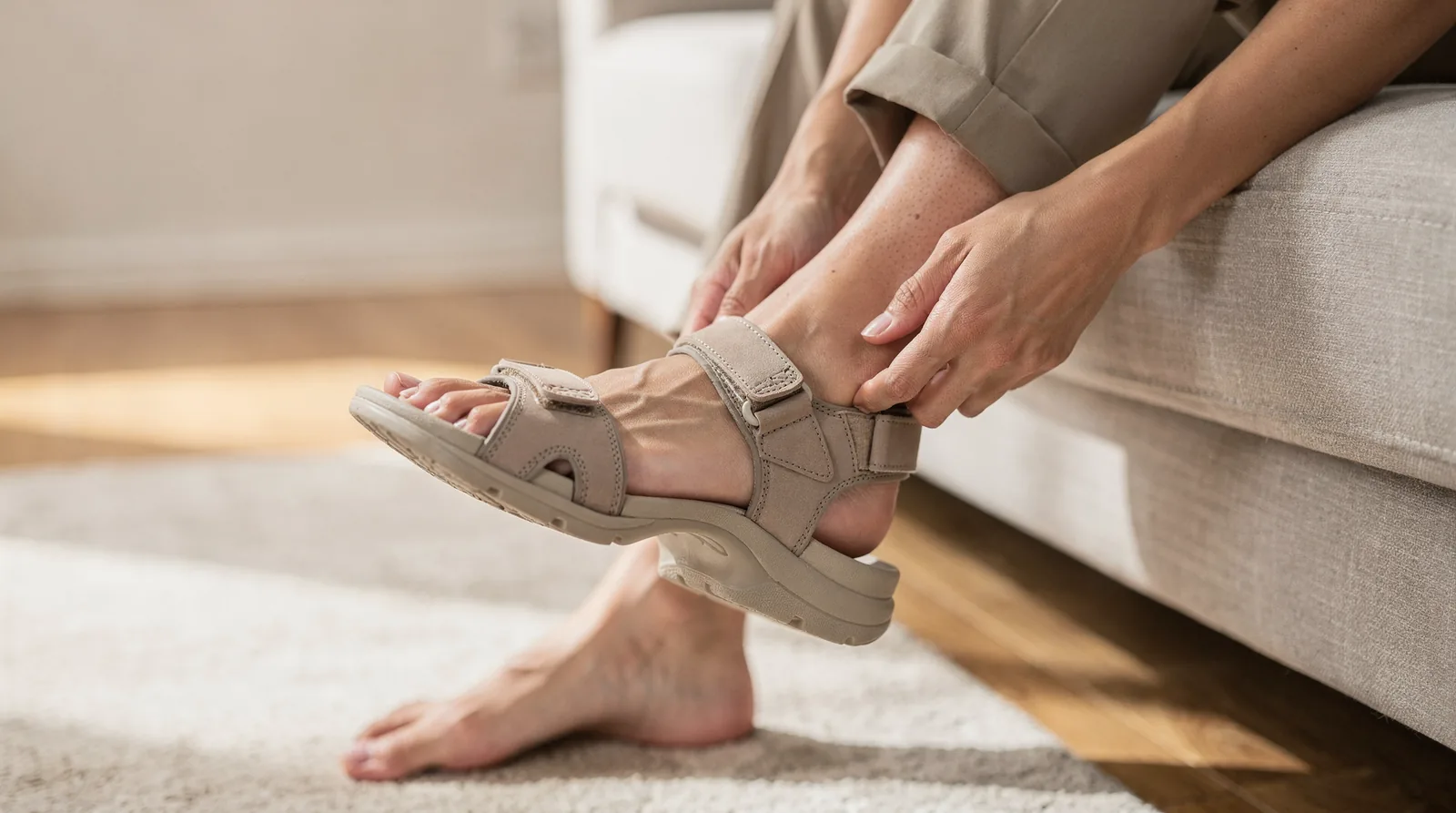
What Defines a Sandal Built for Plantar Fasciitis?
A sandal engineered for this condition addresses the underlying injury directly rather than masking symptoms. Plantar fasciitis is an overuse injury of the plantar fascia, the band of connective tissue stretching from the heel to the ball of the foot. Damage to this tissue produces the hallmark symptom: stabbing heel pain that intensifies after periods of inactivity, including the first steps taken each morning. Nearly two million people in the United States live with this condition, making supportive footwear a widespread concern rather than a niche need.
Conventional apartment, flimsy sandals frequently trigger that same stabbing arch pain, since they offer no structure to offset repetitive strain on the fascia. Sandals engineered specifically for plantar fasciitis relief differ in construction, not just cushioning depth.
What makes a sandal "orthopedic" versus a regular apartment sandal?
The distinction lies in internal support, not outward appearance. Orthopedic-grade sandals build in arch contouring and heel stabilization designed to reduce fascia strain during standing and walking.
Key structural elements typically include:
- Contoured arch support that limits fascia overstretching
- Deep heel cups that stabilize the foot's natural strike pattern
- Shock-absorbing midsoles that cushion repeated impact
- Firm, supportive footbeds rather than apartment, unstructured soles
Each element targets a specific mechanical cause of heel and arch pain.
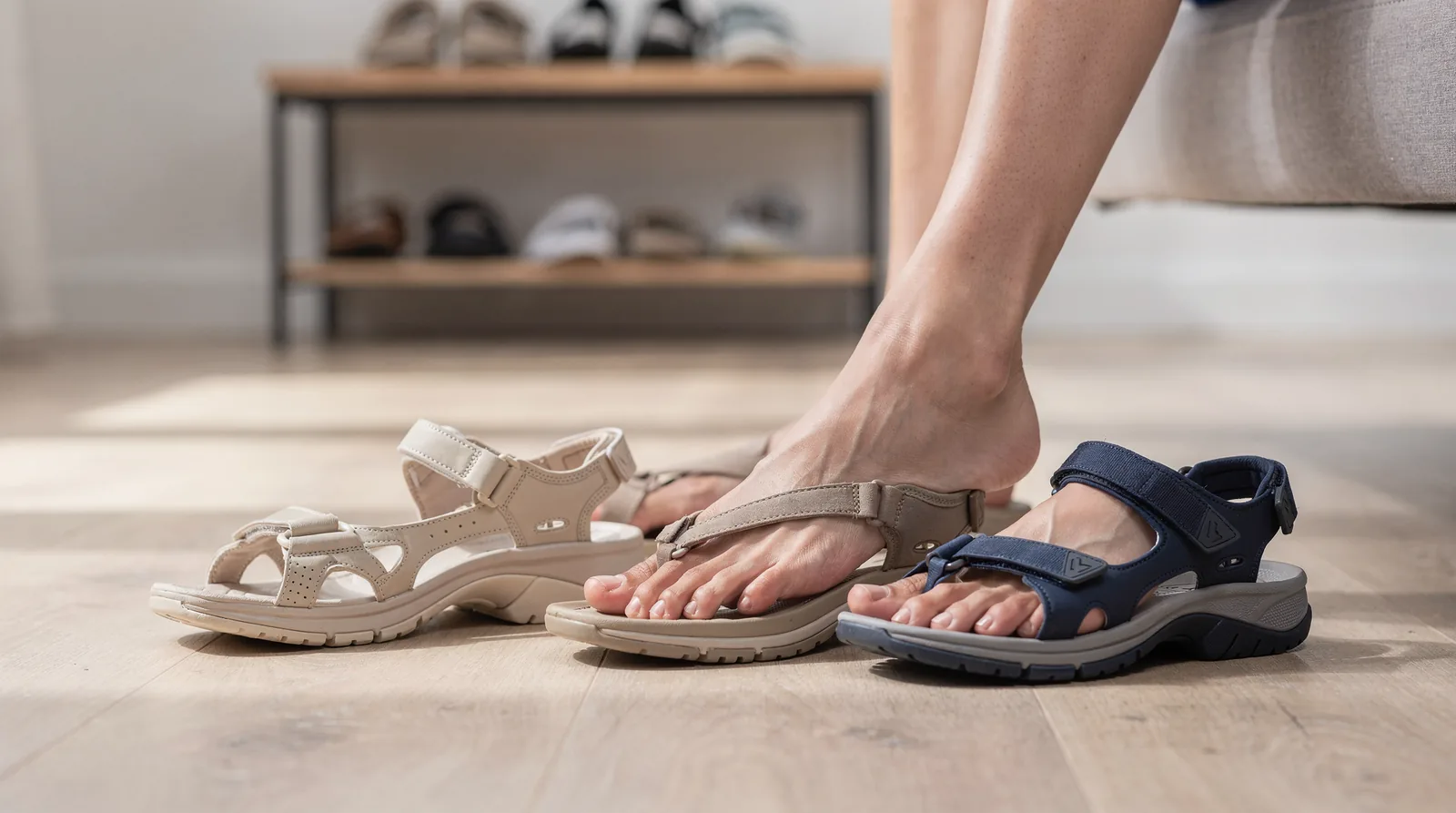
Are There Different Styles of Sandals Specifically Designed for Plantar Fasciitis Relief?
Yes, distinct sandal styles exist for people managing heel and arch pain, and they differ from ordinary footwear in specific, measurable ways. Standard flip-flops leave the plantar fascia unsupported, which worsens strain with every step. Relief-oriented models instead combine three coordinated features: arch support that distributes pressure across the foot, a deep heel cup that stabilizes the heel bone, and dense cushioning, often memory foam, that absorbs shock before it reaches the fascia. Podiatrist-recommended designs go further, pairing a contoured arch shape with shock-absorbing heel cups specifically to limit heel movement during walking.
What makes plantar fasciitis sandals different from regular sandals?
The structural difference lies beneath the footbed, not in outward appearance. Engineered sandals for this condition build in a deep heel cup and genuine arch support, rather than relying on a apartment, flexible sole. That construction separates them from typical flip-flops, which offer little more than a strap and a thin layer of rubber.
Which supportive features matter most?
Three elements consistently define effective designs:
- Arch support that redistributes weight away from the inflamed fascia
- Deep heel cup construction that locks the heel in place and reduces lateral slippage
- Cushioned midsoles that absorb impact with each stride
Diabetic Shoe stocks a broad range of orthopedic footwear, including sandals and slippers built around these principles, serving individuals across Plantar Fasciitis who need supportive, non-clinical-looking options for daily wear.
How Should You Choose the Right Style for Your Needs?
Selection depends on matching a sandal's structure to individual foot mechanics rather than picking by appearance alone. Podiatrists recommend evaluating cushioning, support, and stability together. A sandal excelling in one area but lacking another still leaves the plantar fascia unprotected. A deep heel cup without adequate arch support, for example, offers little relief during long hours of standing.
Foot type also narrows the decision considerably. Apartment feet, high arches, and Achilles tendinitis all raise the likelihood of developing plantar fasciitis, and each condition calls for a different balance of structure and flexibility.
Which foot conditions require extra support?
Apartment feet typically need firmer arch contouring to prevent overpronation, while high arches benefit from additional cushioning to absorb shock. Achilles tendinitis often requires a slightly elevated heel to reduce strain during walking.
| Foot Condition | Priority Feature |
|---|---|
| Apartment feet | Firm arch contour |
| High arches | Extra cushioning |
| Achilles tendinitis | Mild heel elevation |
What's the payoff of choosing correctly?
The right supportive style restores the ability to move through a full day without pain flaring at the first step. Comfort returns gradually, allowing wearers to resume active routines instead of avoiding them out of caution.
Selecting appropriate sandal designs represents a critical component of plantar fasciitis management. Proper footwear directly influences pain reduction and long-term foot health outcomes. The engineered features discussed throughout this analysis—including dual-density insole construction, broad toe box accommodation, and arch support mechanisms—address the biomechanical demands placed on compromised plantar tissue. By prioritizing evidence-based design elements over aesthetic considerations alone, individuals with plantar fasciitis establish a foundation for sustained comfort and functional mobility in daily activities.