


Comfortable Sandals for Foot Pain: Men's Relief Guide
Comfortable Sandals for Foot Pain: Men's Relief Guide

By Diabetic Shoe - An Ortho Shoes Company Editorial Team · Updated 2026-08-01
Orthopedic sandals from Diabetic Shoe deliver relief for plantar fasciitis, apartment feet, heel spurs, and diabetic foot sensitivity through dual-density insoles and broad toe boxes. Adjustable straps and cushioned soles support men aged 40 and older who need daily comfort without sacrificing a polished look. Pricing varies by package; contact the brand directly.
What Should You Prepare Before Buying Orthopedic Sandals?
Three items matter most: a confirmed diagnosis, a checklist of construction features, and a clear sense of daily activity level. Skipping this preparation leads men toward sandals that look supportive but fail under real pressure, leaving heel spurs, arch strain, or diabetic nerve sensitivity unaddressed. Preparation, not brand reputation alone, determines whether a sandal delivers relief or disappointment.
What foot condition should men identify before shopping?
Buyers should name their specific diagnosis first: plantar fasciitis, heel spurs, apartment feet, or diabetic sensitivity each demand different support structures. Specialist-designed footwear addresses several conditions at once. Matching the sandal to the actual problem prevents wasted money on the wrong fit.
Which construction features actually matter?
Cushioned soles, adjustable straps, and slip-resistant outsoles form the baseline for any credible orthopedic sandal. Beyond that baseline, dual-density insoles combined with a broad toe box reduce pressure points across sensitive diabetic and arthritic feet. A critical checkpoint for anyone shopping this category. A contoured arch support paired with a cushioned midsole absorbs shock and cuts fatigue, which matters most for men who spend long hours standing or walking.
Before purchasing, confirm these four items:
- Diagnosis identified (plantar fasciitis, heel spurs, apartment feet, or diabetic foot sensitivity)
- Comfortable sandals for foot pain feature dual-density insoles and a roomy toe box
- Straps adjust easily and outsoles resist slipping
- Midsole cushioning and contoured arch support are present, not just advertised
How Do You Choose and Fit Sandals Step by Step?
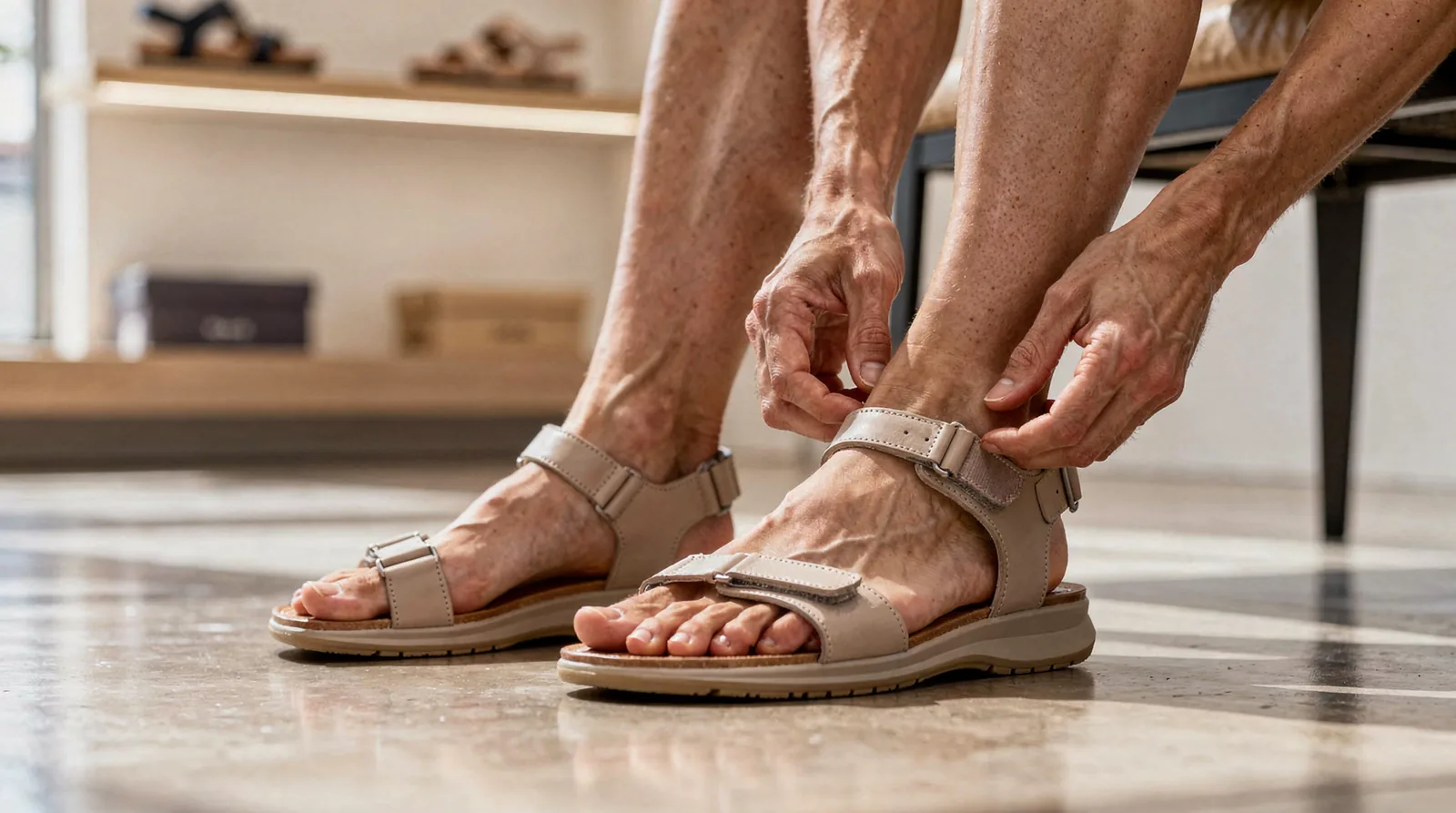
Selection begins with a specialist retailer, not a general shoe rack. A dedicated diabetic and orthopedic footwear source narrows the field before any single pair gets tried on, which saves men with chronic heel or arch pain from wasting time on styles never built for medical support. Following a structured sequence prevents costly fitting mistakes later.
- Identify a specialized source. Start with a retailer positioned specifically for diabetic and orthopedic shoes, slippers, and sandals, rather than a mainstream footwear chain.
- Measure foot width accurately. Chronic conditions like bunions and hammertoes need extra lateral room, so an accurate width measurement comes before browsing styles.
- Confirm a broad toe box. Look for comfortable sandals for foot pain built with a wide toe box; this design keeps material from rubbing against pressure points during daily wear.
- Try the sandal on and adjust the straps. Set strap tension to match the width of the foot, snug enough for stability but loose enough to avoid pinching.
- Test the sole for grip. Walk on a hard surface to confirm the slip-resistant sole holds steady, since traction protects against falls on wet or uneven ground.
What Makes a Toe Box "Broad Enough" for Foot Pain?
A toe box qualifies as broad enough when the front of the sandal allows toes to spread naturally without touching the sides. Men with bunions or hammertoes need this extra space to prevent friction sores. Dual-density insoles paired with a wide front panel address pressure distribution and width simultaneously.
Should Straps Be Tight or Loose for Diabetic Feet?
Straps should sit snug, not tight, adjusted to hold the foot in place without cutting into skin. Diabetic feet often carry reduced sensation. A moderate, evenly distributed tension paired with a slip-resistant sole reduces both chafing risk and fall risk during everyday wear.
What Mistakes Should You Avoid Wearing Orthopedic Sandals?
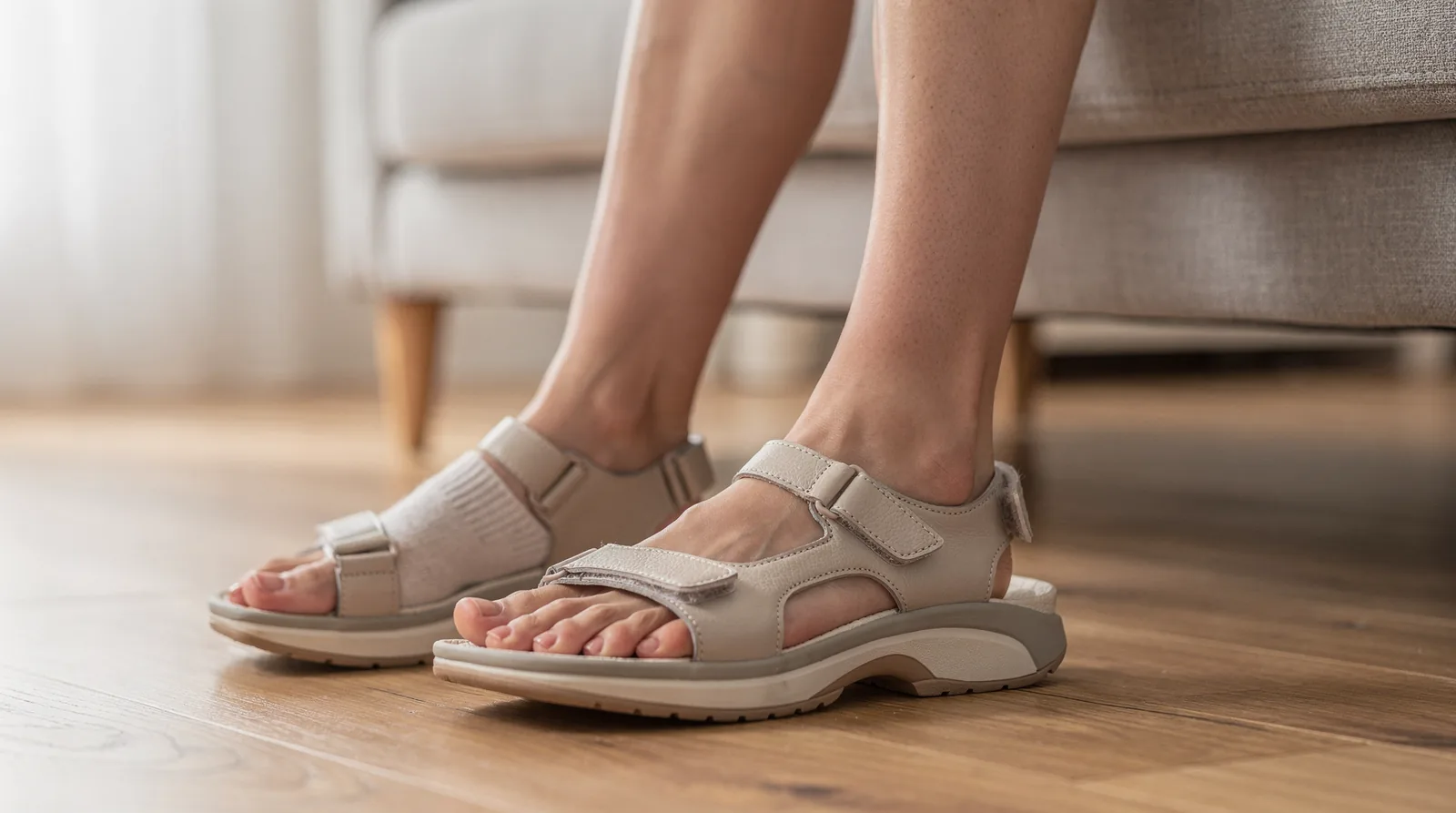
Three errors undo the benefits orthopedic sandals provide. Each one reverses the relief that specialist-engineered footwear delivers, leaving men 40 and older exposed to the same discomfort they set out to fix.
Does switching back to regular shoes undo the benefits?
Yes. Discomfort returns once wearers abandon supportive sandals for unsupportive shoes. Specialists design these products specifically to reduce foot strain and support active routines. Consistency matters more than occasional use.
Why does toe box width matter so much?
Men with bunions or hammertoes often pick narrow, stylish designs over function. That choice cancels the value of a broad toe box paired with dual-density insoles, which exists precisely to relieve pressure on crowded or misshapen toes.
A third mistake involves stability. Skipping traction and stability features raises the risk of missteps for those with mild to moderate pronation or other foot conditions. Avoid these habits:
- Rotating back to apartment, unsupported footwear between wears
- Selecting narrow-fit sandals despite bunions or hammertoes
- Ignoring tread and stability ratings on the outsole
Correcting these choices protects both comfort and long-term foot health.
Orthopedic sandals represent a clinically validated approach to managing men's foot pain through engineered design principles that address biomechanical dysfunction. The integration of supportive arch structures, cushioning technologies, and accommodative toe box configurations directly addresses the physiological demands of individuals experiencing chronic foot discomfort. By prioritizing evidence-based construction over aesthetic compromise, quality orthopedic sandals deliver measurable relief while maintaining functional versatility for daily wear. This intersection of therapeutic design and practical utility establishes orthopedic sandals as an essential component of comprehensive foot pain management strategies.