


Can These Shoes Accommodate Custom Orthotics for Additional Support with Plantar Fasciitis
Can These Shoes Accommodate Custom Orthotics for Additional Support with Plantar Fasciitis
By Diabetic Shoe - An Ortho Shoes Company Editorial Team · Updated 2026-08-01
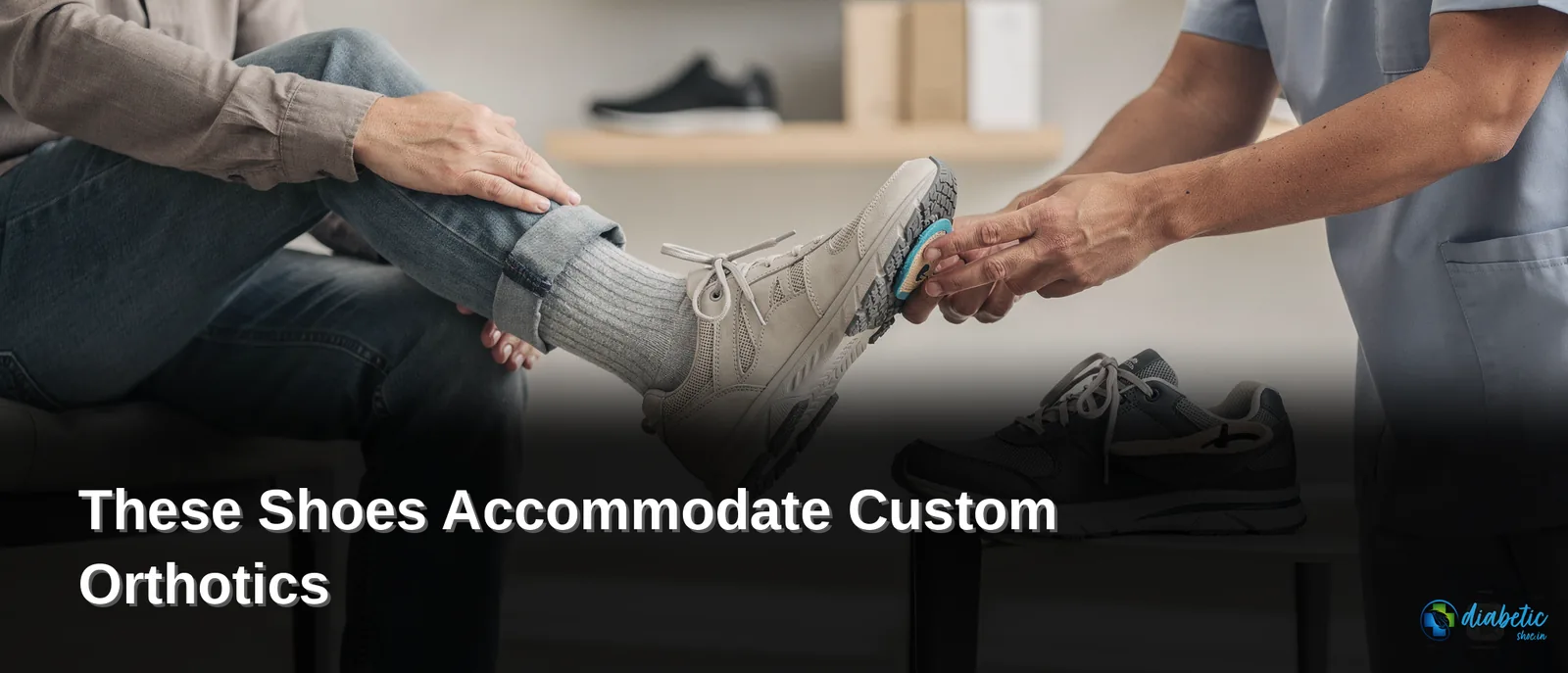
Effective relief requires shoes with removable insoles, deep heel cups, and extra depth to fit custom orthotics without crowding the foot. Diabetic Shoe designs orthopedic footwear with dual-density insoles. Broad toe boxes, similar to Orthofeet's 60-day wear test model, giving the plantar fascia stability instead of added pressure with every step.
Why Do Regular Shoes Undo Your Orthotics?
Standard footwear compresses the exact space a custom orthotic needs to function. Mass-market shoes rely on apartment insoles. Narrow toe boxes, leaving no room for an insert and forcing the foot into a cramped, unstable position. That mismatch cancels out the arch support and pressure redistribution a podiatrist prescribed in the first place.
Diabeticshoe.in markets its engineered comfort construction directly toward diabetic. Orthopedic foot pain relief, the same population that depends on shoes that can accommodate custom orthotics for additional support with plantar fasciitis. Dual-density insoles paired with broad toe boxes create the extra volume an orthotic requires to sit properly without crowding the foot. That depth matters more than most shoppers realize until a fitting goes wrong.
Does shoe depth really affect orthotic performance?
Yes. Footwear designed for orthotic wearers needs internal depth and structural build that works with the insert, not against it. Skip that clearance, and the orthotic shifts, the heel loses contact, and plantar fascia strain returns within days.
Specialists design these products specifically to reduce discomfort and provide maximum support across a range of foot conditions. Customers can stay active without compromise. Regular shoes were never engineered with that goal — they prioritize appearance over orthotic compatibility. That distinction separates a shoe that helps an orthotic work from one that quietly defeats it.
Can These Shoes Accommodate Custom Orthotics?
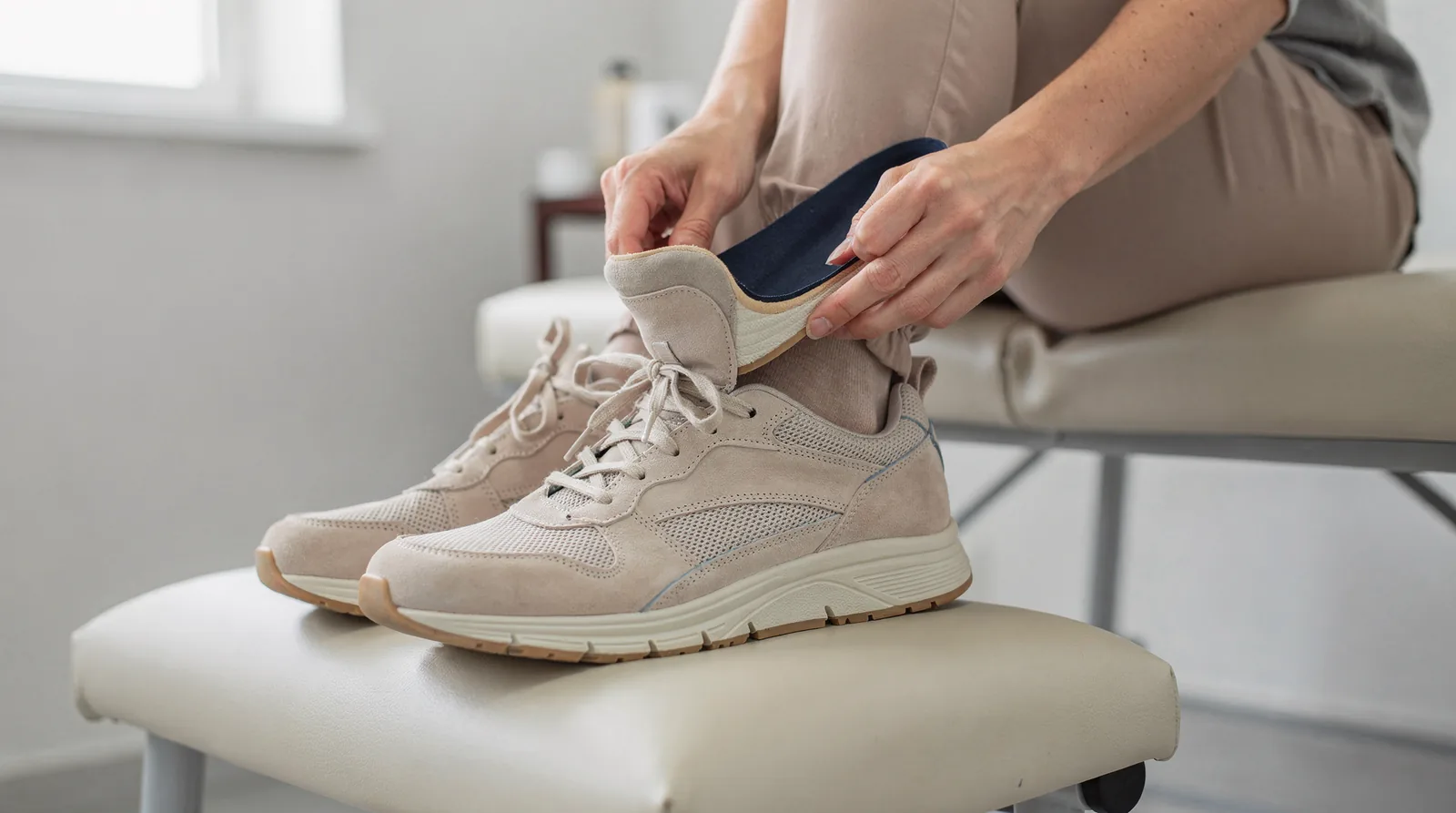
Yes. Diabeticshoe.in builds its footwear around custom orthotic support for plantar fasciitis, not as an afterthought but as a core design goal. Losing that compatibility means losing the entire point of a podiatrist-issued device. A shoe that squeezes out an orthotic. Forces the foot into a shape the insert was never molded for, cancels out months of clinical fitting work.
Diabeticshoe.in operates as a leading retailer of diabetic and orthopedic footwear, the category built specifically around orthotic compatibility. Its lineup pairs that footwear with a dedicated selection of premium orthotic products. Customers aren't left guessing which shoe shell matches which insert. Construction relies on dual-density insoles and broad toe boxes, engineered to leave enough internal clearance once a factory insole gets pulled and a custom device goes in.
Do plantar fasciitis shoes need a removable insole?
Removability matters more than cushioning alone. Models built for plantar fasciitis often include a removable orthotic insole paired with two extra spacers, allowing the shoe to adjust for orthotic thickness. Without that spacer system, a custom orthotic sits too high, crowding the toe box and shifting heel position.
What should someone check before buying?
- Confirm the factory insole lifts out completely
- Check toe box depth after the orthotic is inserted
- Verify heel cup shape matches the orthotic's contour
What Should You Check Before You Buy?
Five specific fit points determine whether a shoe protects the plantar fascia or aggravates it. Shoppers already carrying custom orthotics face a narrower checklist, since the shoe must hold the device without compressing the foot. Skipping these checks often means paying twice: once for the orthotic, once for the shoe that undermines it.
Width and depth top the list. A broad toe box matters most for wearers managing plantar fasciitis alongside bunions or hammertoes. It reduces pressure on the forefoot instead of concentrating it. Extra-wide and extra-extra-wide options exist precisely for this reason, leaving enough internal volume for orthotic thickness without pinching the sides of the foot.
Can These Shoes Accommodate Custom Orthotics for Additional Support With Plantar Fasciitis?
Yes, when the design includes a removable footbed and sufficient internal depth. Shoes built with firm midsoles, heel stability features, and contoured insoles work together to ease pressure on the plantar fascia, but that structure only helps if the factory insole can be pulled out to make room. Wearers should confirm removability before purchase, not after the orthotic arrives.
Beyond fit, buyers should evaluate:
- Midsole firmness — resists collapsing under body weight
- Heel stability — limits excess motion during push-off
- Insole contour — supports arch mechanics, not just cushioning
The larger goal behind supportive footwear is mobility, not restriction. Keeping wearers active despite a chronic foot condition rather than sidelining them from daily routines.
Selecting appropriate footwear that accommodates custom orthotics represents a critical component of comprehensive plantar fasciitis management. Shoes engineered with accommodative features—including dual-density insoles, broad toe boxes, and structured arch support—work synergistically with custom orthotic devices to address biomechanical dysfunction and reduce plantar tissue strain. This integrated approach to footwear selection delivers measurable relief. Supports long-term foot health outcomes for individuals managing this prevalent condition.