


Stylish Plantar Fasciitis Shoes for Women
Stylish Plantar Fasciitis Shoes for Women

By Diabetic Shoe - An Ortho Shoes Company Editorial Team · Updated 2026-08-01
Comfortable sandals for plantar fasciitis require a deep heel cup, contoured arch support, and a dual-density insole that cushions pressure points. Diabetic Shoe designs orthotic sandals with these engineered features, plus a broad toe box for natural toe splay. Adjustable straps accommodate custom orthotic inserts, ensuring stability without sacrificing the arch reinforcement chronic heel pain sufferers require daily.
What Should You Confirm Before Buying Sandals?
Confirmation starts with insole construction. Shoppers should verify that a sandal uses dual-density insoles, a design that pairs a firmer base layer with a softer top layer to cushion the heel and arch. This construction appears across specialist orthotic lineups because it addresses two needs at once: structural support underneath and pressure relief on top. A single-density foam pad, by contrast, compresses apartment within weeks and leaves the plantar fascia exposed to repeated strain.
Toe box width deserves equal attention. Sandals with narrow, tapered fronts squeeze the forefoot and worsen conditions like bunions or hammertoes that often accompany heel pain. A broad toe box reduces that friction and lets toes spread naturally during each step.
Why Does Sandal Choice Matter So Much for Heel Pain?
Roughly two million people across the United States live with plantar fasciitis, so this is not a niche shopping problem. Footwear built without arch support or cushioning directly aggravates the condition rather than easing it.
Before purchasing, confirm the following:
- Check for a dual-density insole rather than a single foam layer.
- Measure the toe box width against the widest part of the foot.
- Look for sandals marketed specifically toward diabetic or orthopedic foot pain relief, since these lines target structural correction rather than general comfort.
- Ask whether the sandal has been tested for all-day wear, not just short trips to the mailbox.

How Do You Evaluate Support Features Step By Step?
Evaluation starts with the heel cup, not the outsole. A deep, structured heel cup keeps the foot centered and stable, which matters more than cushioning alone. Specialists who craft stylish plantar fasciitis shoes for women design each pair to alleviate discomfort. Provide maximum support across a range of foot conditions. The assessment process should follow the same order the designers use.
Follow these steps when comparing a pair of sandals or shoes side by side:
- Press a thumb into the heel cup and check for a rigid, cradling shape rather than a soft, collapsible one.
- Bend the sole in half; a supportive shoe resists folding at the midfoot.
- Check the arch contour against the inside of the foot, looking for contact rather than a gap.
- Confirm the footbed keeps the foot in a neutral position through the gait cycle, since this reduces the pull on the plantar fascia that triggers sharp first-step pain.
- Try the pair on and take ten steps on a hard floor to test real-world stability, not showroom comfort.
What foot conditions besides plantar fasciitis should shoppers watch for?
Shoppers managing plantar fasciitis often deal with hammertoes, bunions, or diabetes at the same time. These orthotic brands design specifically for that overlapping population, not a narrow single-condition customer.
Where should someone shop to compare options efficiently?
A dedicated diabetic and orthopedic retailer typically stocks shoes, slippers, and sandals under one roof. That range simplifies the search considerably, letting shoppers compare heel-cup depth and arch height without switching sites or brands mid-search.
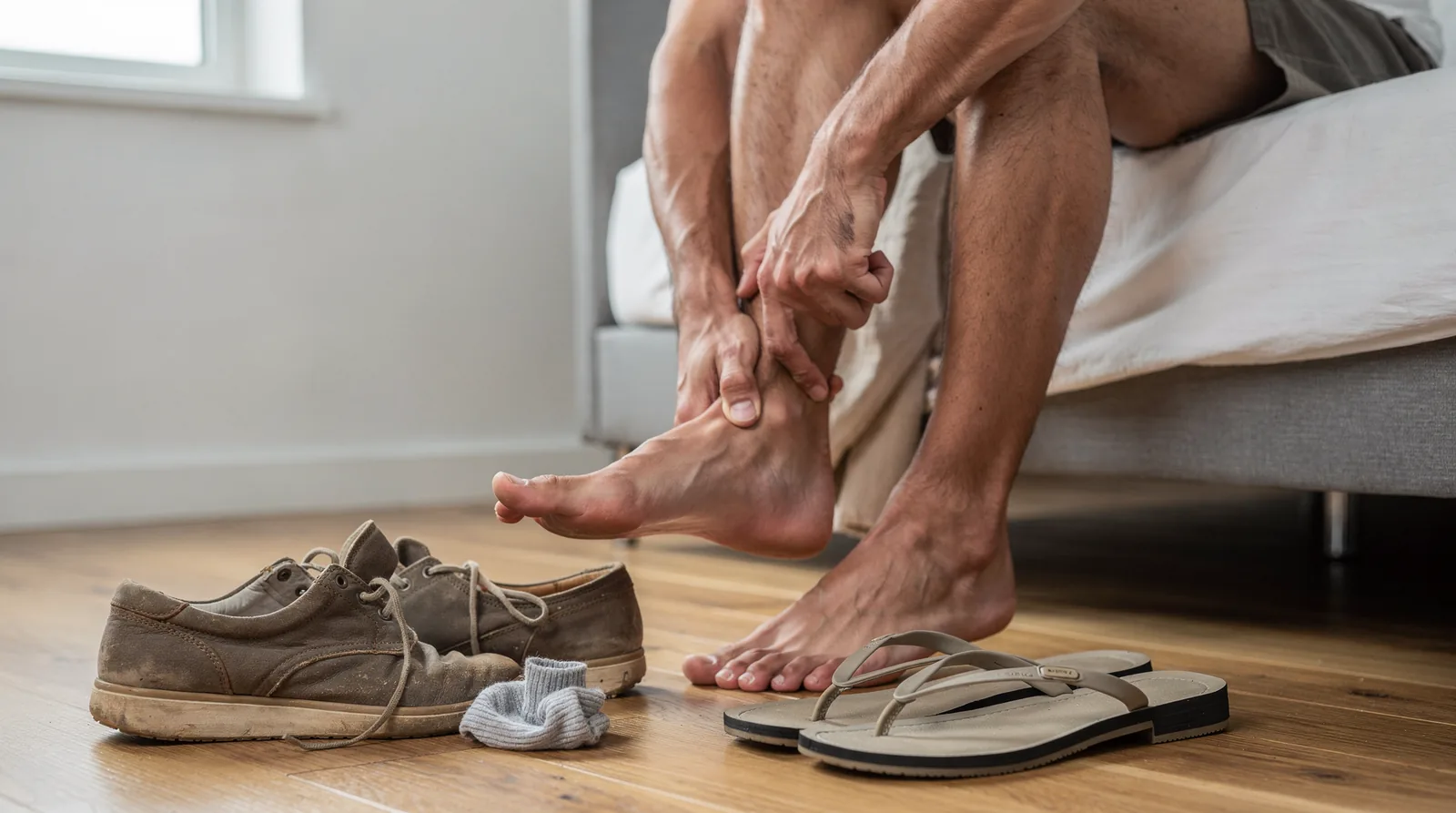
What Mistakes Undermine Plantar Fasciitis Relief?
Four recurring errors sabotage foot comfort more than any single flaw in a shoe's design. Vanity-driven choices top the list: a apartment, unstructured sandal chosen for its looks places direct strain on the plantar fascia with every step, worsening symptoms instead of easing them. Comfort and appearance do not have to compete, but many shoppers pick one and lose the other.
Why do supportive sandals still fail some wearers?
Support fails when it stops at the sole. Skipping dual-density cushioning and a broad toe box in favor of a purely decorative sandal reintroduces the exact pressure points wearers are trying to escape. Stylish plantar fasciitis shoes for women need structure built into every layer, not just a padded footbed.
What fit details get overlooked most often?
Fit gets treated as an afterthought. Overlooking adjustable straps and wide-width sizing leaves swollen or wider feet cramped, undoing the benefit of an otherwise well-built sole.
Common mistakes include:
- Choosing style over structural support
- Ignoring dual-density cushioning and toe-box width
- Skipping adjustable and wide-width options
- Assuming any "arch support" label guarantees relief
Specialist-designed footwear exists to keep wearers active, not sidelined by avoidable pain.
Selecting appropriate sandals for plantar fasciitis requires deliberate attention to structural support, cushioning technology, and biomechanical alignment. The evidence demonstrates that footwear incorporating arch support, shock-absorbing materials, and secure fastening mechanisms substantially reduces strain on the plantar fascia. By prioritizing these evidence-based design features over aesthetic considerations alone, individuals with plantar fasciitis establish a foundation for improved comfort and functional mobility. Strategic footwear selection represents a measurable intervention in comprehensive foot health management.