


Comfortable Shoes for Plantar Fasciitis: What to Look For
Comfortable Shoes for Plantar Fasciitis: What to Look For

By Diabetic Shoe - An Ortho Shoes Company Editorial Team · Updated 2026-08-01
Effective plantar fasciitis sandals combine deep heel cups, dual-density cushioning, and firm arch support to offload strain on the plantar fascia, the connective tissue running from heel to forefoot. Diabetic Shoe designs sandals with broad toe boxes and engineered insoles for this purpose. Adjustable straps accommodate swelling, while seam-free interiors prevent irritation.
What Do Plantar Fasciitis Sandals Need to Relieve Heel Pain?
Effective sandals target the plantar fascia, the connective tissue running from heel to forefoot that becomes inflamed with overuse. Untreated strain on this tissue keeps pain flaring with every step, turning simple errands into an ordeal. Podiatrists point to three non-negotiable features: cushioning, support, and stability. Sandals lacking these elements let the fascia absorb shock unchecked, worsening irritation over time.
Construction matters as much as materials. Comfortable shoes for plantar fasciitis rely on engineered designs, including dual-density insoles and broad toe boxes, to counter foot pain at its source. Dual-density insoles pair a firmer base layer for structural support with a softer top layer for cushioned impact absorption. Broad toe boxes give toes room to spread naturally, reducing pressure points that aggravate inflamed tissue.
What Features Should Shoppers Check Before Buying?
Shoppers should confirm three elements before purchase: adequate arch support, a stable heel cup, and cushioned footbeds that don't compress apartment within weeks. Absent these, sandals fail to protect the fascia during daily wear.
- Cushioning: Absorbs shock at heel strike and forefoot push-off.
- Support: Stabilizes the arch to limit fascia stretch.
- Stability: Keeps the foot aligned, preventing side-to-side strain.
Why Does Toe Box Width Matter for Heel Pain?
A broad toe box prevents crowding that shifts weight unevenly across the foot. Uneven weight distribution places added stress on the heel, compounding existing inflammation.

How Do You Select the Right Pair Step by Step?
Selecting sandals for plantar fasciitis follows a clear sequence, starting with the source and ending with the fit test. Skipping steps risks a purchase that looks supportive but leaves the plantar fascia unprotected during long days on hard surfaces. A structured approach significantly reduces guesswork.
- Start with a specialized retailer. Shoppers researching diabetic and orthopedic footwear, including sandals, should begin with a source that focuses specifically on this category rather than general shoe stores.
- Confirm the design comes from specialists. Footwear engineered by podiatric and orthopedic specialists is built to alleviate discomfort and support various foot conditions, giving wearers a dependable foundation before comparing styles.
- Check the toe box width. A broad toe box reduces pressure points and leaves room for orthotic inserts, an essential fitting detail for anyone managing daily foot pain.
- Test the arch and heel support. Targeted arch support paired with extra heel cushioning eases strain on the plantar fascia with every step, which matters most during extended standing or walking.
- Walk before buying. A short walk in the sandal reveals whether the arch contact feels supportive rather than intrusive.
What Should Someone Check First When Trying On Sandals?
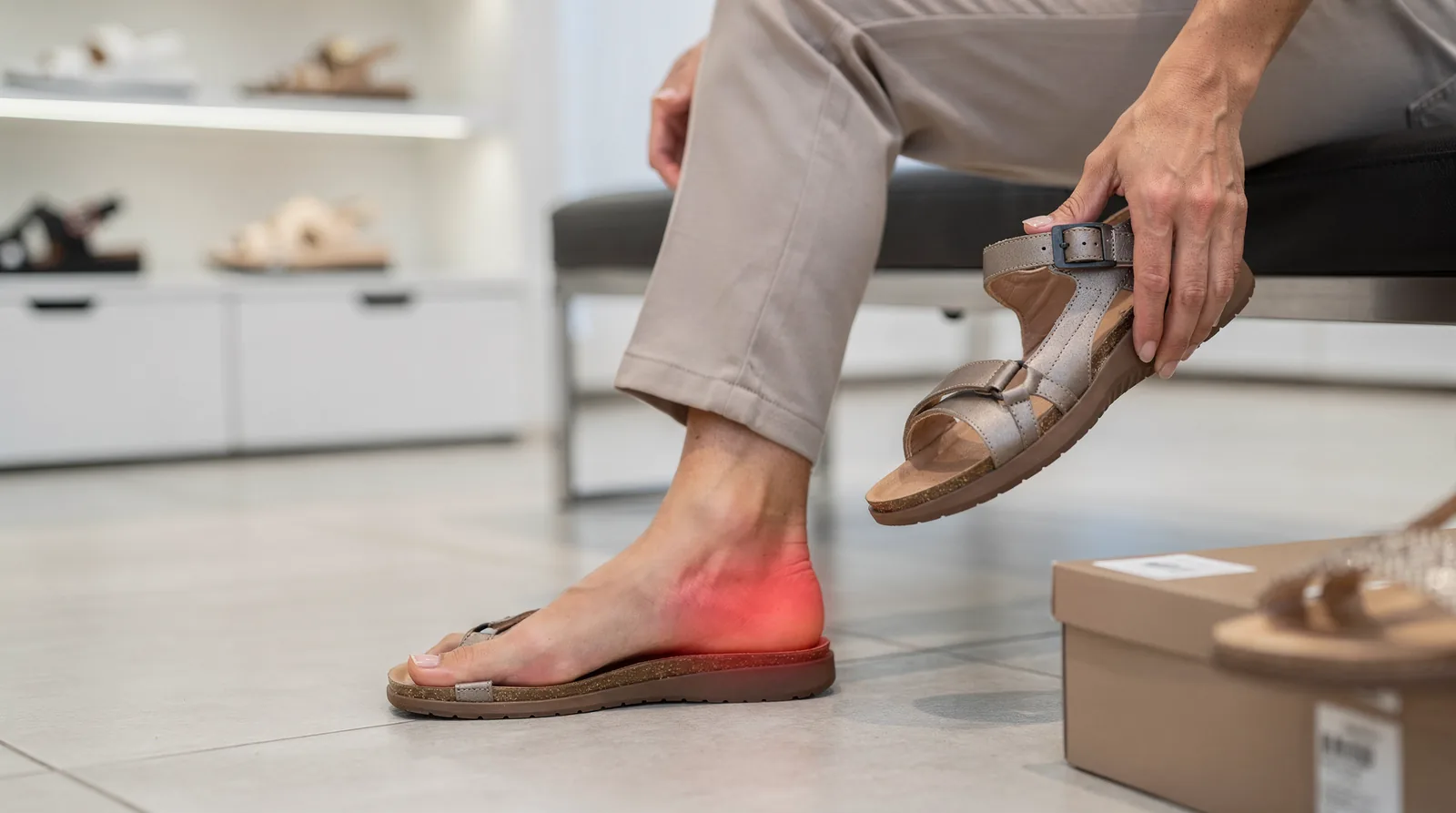
Fit the toe box first. Toes need freedom to spread without rubbing against the sandal's edge. Restricted space aggravates existing heel and arch pain over time.
What Mistakes Undermine Plantar Fasciitis Sandal Choices?
Three recurring errors keep shoppers stuck in pain: ignoring lifestyle demands, skipping structural support, and settling for standard sandals over orthotic-grade construction. Each mistake carries a cost measured in missed steps, missed activities, and heel pain that lingers into evening. Avoiding these pitfalls starts with understanding what proper comfortable shoes for plantar fasciitis actually require.
Does ignoring daily activity level make foot pain worse?
Yes. Sandals selected without regard for an active lifestyle often fail to address chronic discomfort at its source. Specialists design orthopedic footwear specifically to relieve pressure points and support various foot conditions. Customers can stay mobile rather than limit movement to avoid pain.
What structural features get overlooked most often?
Shoppers frequently skip two critical elements: a deep heel cup and adequate shock absorption. Both features cushion the heel during weight-bearing movement, which matters most for anyone standing or walking for extended periods.
Common mistakes to avoid include:
- Choosing apartment, unstructured soles with no contoured arch
- Prioritizing style over orthotic-grade materials
- Assuming all cushioned sandals offer equal support
Settling for standard sandals instead of premium orthotics undermines lasting relief. Durable, purpose-built construction addresses plantar fasciitis symptoms far more reliably than generic warm-weather footwear ever will.
Selecting appropriate plantar fasciitis sandals requires deliberate attention to structural support, cushioning technology, and biomechanical alignment. The most effective options incorporate arch support systems, shock-absorbing materials, and designs that accommodate foot swelling while maintaining stability throughout daily activities. By prioritizing these evidence-based features over aesthetic considerations, individuals with plantar fasciitis establish a foundation for pain reduction and improved functional mobility. Investing in properly engineered footwear represents a substantive step toward long-term foot health and sustained comfort.