


How Can Plantar Fasciitis Footwear Improve My Foot Pain and Overall Comfort
How Can Plantar Fasciitis Footwear Improve My Foot Pain and Overall Comfort
By Diabetic Shoe - An Ortho Shoes Company Editorial Team · Updated 2026-08-01
When it comes to How Can Plantar Fasciitis Footwear Improve My Foot Pain. Overall Comfort?, plantar fasciitis footwear from Diabetic Shoe reduces heel and arch strain through dual-density insoles that cushion the plantar fascia with each step. Broad toe boxes eliminate pressure points, while structured arch support stabilizes foot mechanics throughout the day. This engineered design, found across the brand's diabetic and orthopedic collection, aims to enhance comfort for daily walking and standing.
Why Does Plantar Fasciitis Cause Morning Heel Pain?
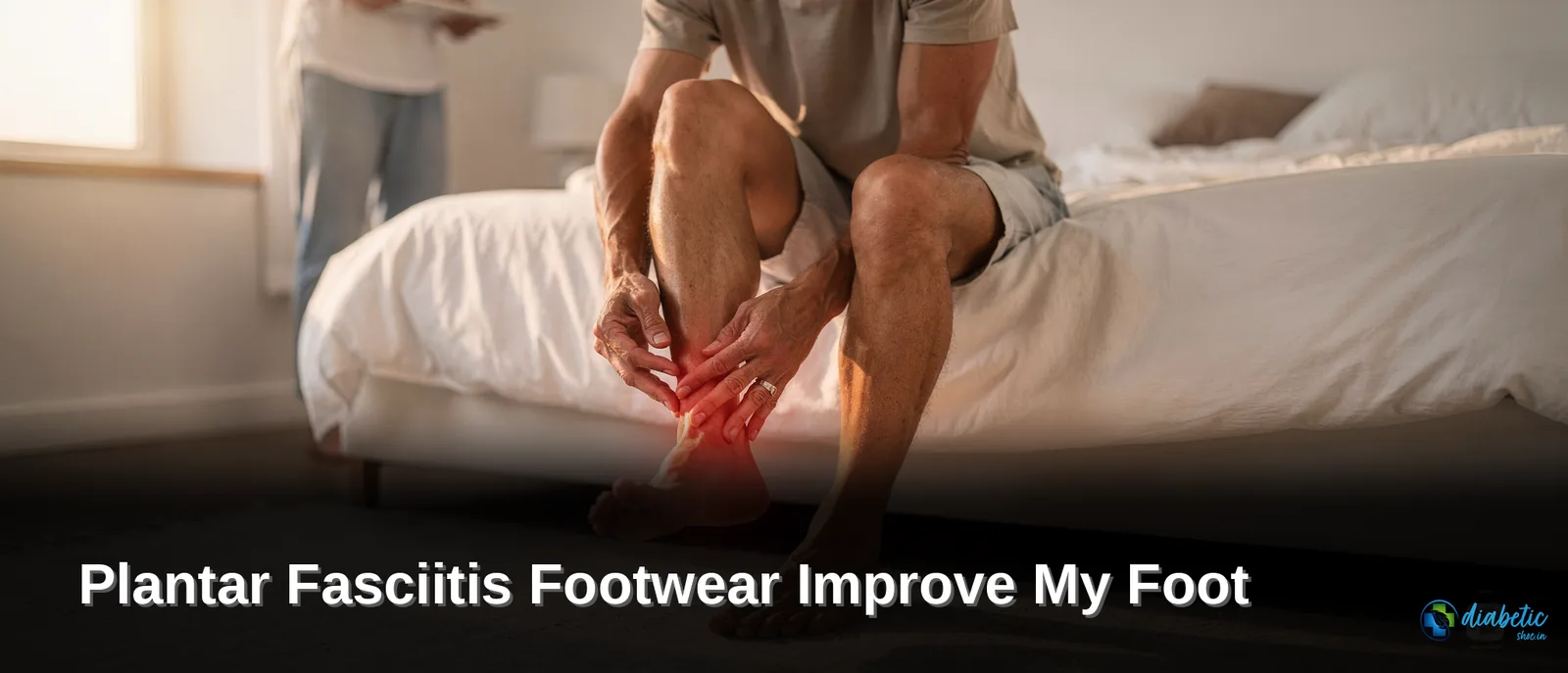
Inflammation of the plantar fascia produces the stabbing heel pain that many adults notice first thing in the morning. The plantar fascia forms a thick band of tissue stretching across the sole of the foot. Swelling in that tissue creates sharp discomfort after periods of rest. Sleep allows the fascia to tighten and shorten overnight. That first step out of bed re-stretches the inflamed band, triggering the classic stabbing sensation associated with plantar fasciitis.
Does standing still make plantar fasciitis worse?
Extended rest, including sleep, allows the fascia to contract and lose flexibility. Standing after any stationary period forces the tissue to stretch suddenly, which reignites pain. This cycle repeats daily unless footwear reduces strain on the fascia during walking.
Footwear choice plays a direct role in easing this cycle, answering the question of how can plantar fasciitis footwear improve my foot pain and overall comfort, which depends on how well a shoe distributes pressure across the sole rather than concentrating it at the heel.
Diabetic Shoe engineers footwear built around this exact mechanical problem. Two design elements matter most:
- Dual-density insoles that cushion the heel strike while supporting the arch
- Broad toe boxes that reduce pressure points across the forefoot
What should shoppers look for in a shoe for heel pain?
Specialists craft each pair to relieve discomfort and provide maximum support for foot conditions like plantar fasciitis. This construction approach helps customers stay active without sacrificing daily comfort.
What Shoe Features Actually Relieve Plantar Fasciitis?
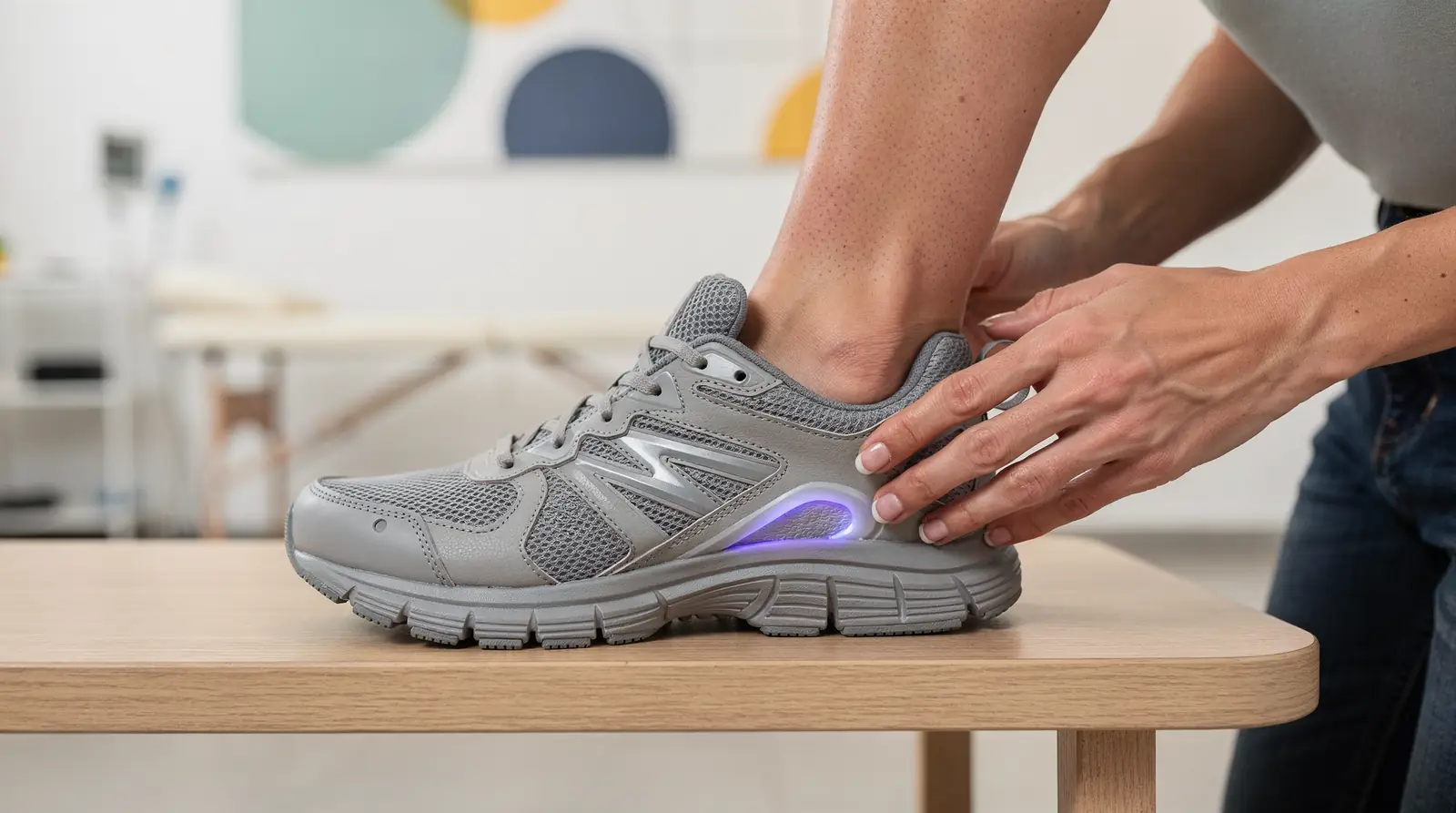
Firm-yet-comfortable cushioning relieves plantar fasciitis pain most effectively when paired with solid arch support and structural stability. Podiatrists consistently flag overly soft midsoles as a problem: shoes that collapse under body weight fail to protect the plantar fascia during each step. A shoe that feels plush but still holds its shape absorbs shock without letting the heel sink into an unstable base.
Two design elements matter most for daily comfort. Broad toe boxes stop the forefoot from crowding, reducing pressure on nerves and joints already strained by inflammation. Dual-density insoles cushion the heel strike, the exact moment when plantar fascia tissue takes the sharpest load. Together, these features counter the mechanical stress that makes mornings and long walks so painful for people managing this condition.
Why does the toe box width matter so much?
A narrow toe box squeezes the forefoot, forcing toes into an unnatural position with every stride. This crowding increases pressure across the ball of the foot and can aggravate the fascia's attachment points. A wider toe box lets the foot spread naturally, distributing weight more evenly.
Do insoles really make a difference?
Dual-density insoles use two layers of foam density to balance cushioning with support. The softer top layer absorbs impact, while the firmer base layer prevents excessive compression. This combination protects the heel without sacrificing stability.
Diabetic and orthopedic footwear specialists build shoes, slippers, and sandals around these exact support requirements, giving foot pain sufferers options engineered specifically for daily relief. cite-1
How Does the Right Footwear Restore Daily Comfort?
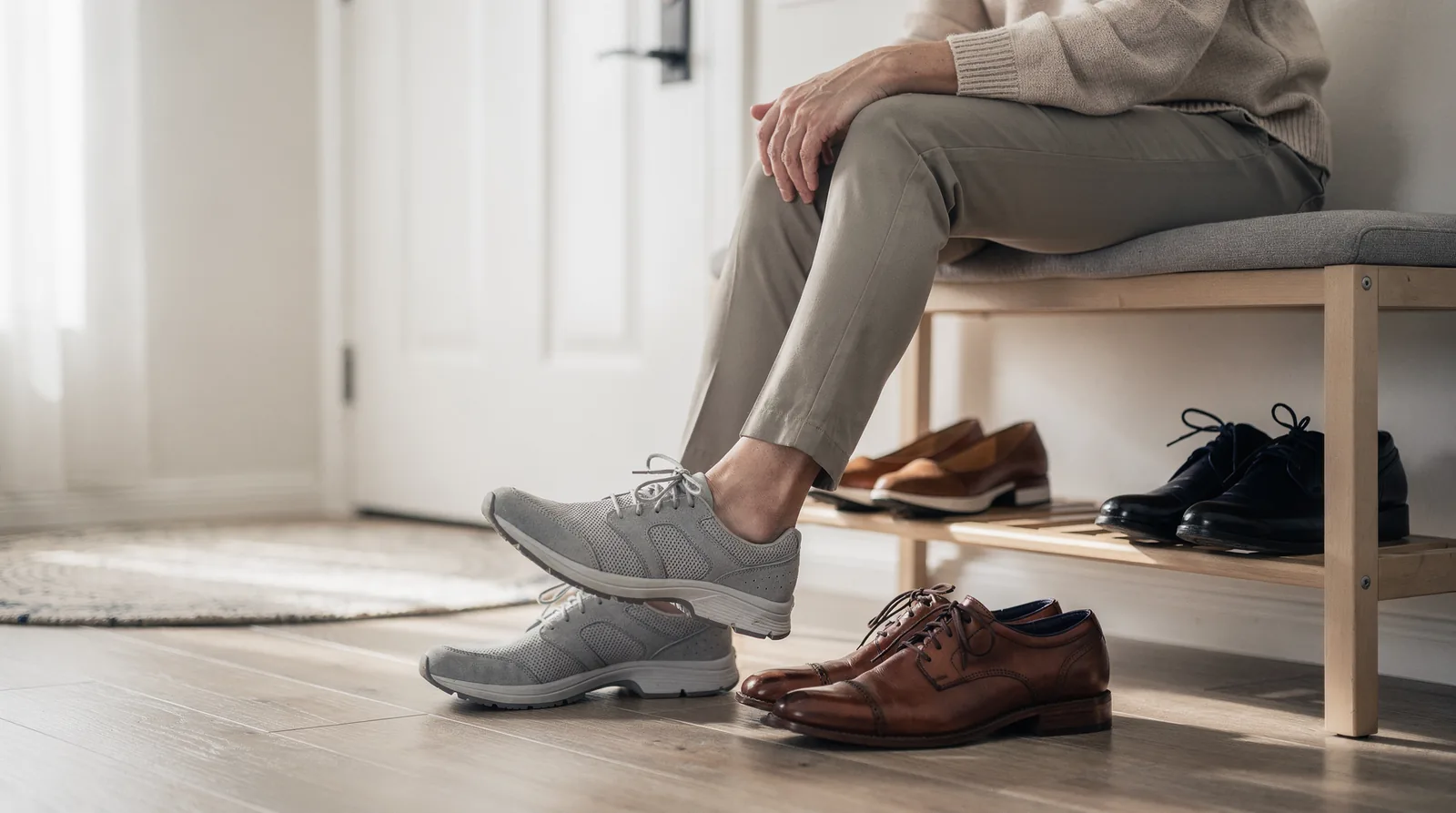
Daily comfort returns when footwear designed for plantar fasciitis relief replaces generic sneakers built without arch or heel support. Clinical research on plantar fasciitis patients confirms that shoe selection measurably affects long-term foot health. Appropriate footwear correlates with reduced disability, while poor choices compound heel and arch strain over time. Small adjustments in daily footwear, researchers note, may prevent substantial discomfort down the road.
Can better shoes really keep someone active despite heel pain?
Consistent use of properly engineered shoes allows individuals with plantar fasciitis to sustain active routines instead of curbing movement to dodge pain. Specialists design these products specifically to ease discomfort and deliver support tailored to varied foot conditions. Daily walking, standing, and errands feel manageable rather than punishing.
A dedicated lineup makes that consistency easier to maintain:
- Orthopedic and diabetic shoes for everyday support
- Slippers for indoor comfort
- Sandals for warm-weather wear
Together, these categories give sufferers year-round options built around one goal: lasting comfort.
Plantar fasciitis footwear addresses the biomechanical root causes of heel pain through engineered arch support, cushioning systems, and structural design modifications that reduce strain on the plantar fascia. By stabilizing the foot and distributing pressure evenly across the sole, these specialized shoes facilitate pain reduction and restore functional mobility for daily activities. Individuals experiencing plantar fasciitis benefit from footwear engineered specifically to address this condition, enabling sustained comfort and improved quality of life.