


Orthopedic Footwear for Active Men: Comfort and Support
Orthopedic Footwear for Active Men: Comfort and Support
By Diabetic Shoe - An Ortho Shoes Company Editorial Team · Updated 2026-08-01
Orthopedic shoes for men with foot pain require dual-density insoles, broad toe boxes, and reinforced arch support to reduce pressure on plantar fasciitis, bunions, and arthritic joints. Diabetic Shoe's Orthofeet® men's collection, priced from ₹1,849 to ₹11,995, combines seamless interiors with cushioned soles, minimizing friction points that trigger diabetic foot complications and chronic standing fatigue.
What Features Matter Before Buying Orthopedic Shoes?
Four structural elements separate genuine therapeutic footwear from ordinary sneakers marketed as comfortable. Orthopedic footwear for active men with chronic foot pain works because it targets specific pressure points. Structural weaknesses, not because it simply feels soft. Skipping these features risks continued heel pain, worsening bunions, or unmanaged diabetic complications. Men evaluating their first pair should check each factor below before purchasing.
What insole design actually reduces foot pain?
Dual-density insoles combine two cushioning layers of differing firmness. The softer top layer cushions pressure points that trigger diabetic and orthopedic pain. A denser base layer maintains structural support underneath.
Does toe box width really matter?
Yes. A broad toe box gives toes room to move instead of compressing them. This reduces friction and pressure on bunions. Hammertoes, two of the most common sources of forefoot pain in men over 40.
Beyond insoles and toe room, construction quality determines long-term relief. Specialist-crafted shoes are built to address a range of foot conditions, not a single symptom. Consider these core features together:
- Dual-density insoles for pressure-point cushioning
- Broad toe boxes for bunion and hammertoe relief
- Arch support paired with condition-specific design
- Specialist construction aimed at maximum support
Arch support combined with foot condition management forms the foundation of any shoe worth considering for daily wear.
How Do You Match Shoes To Foot Pain?
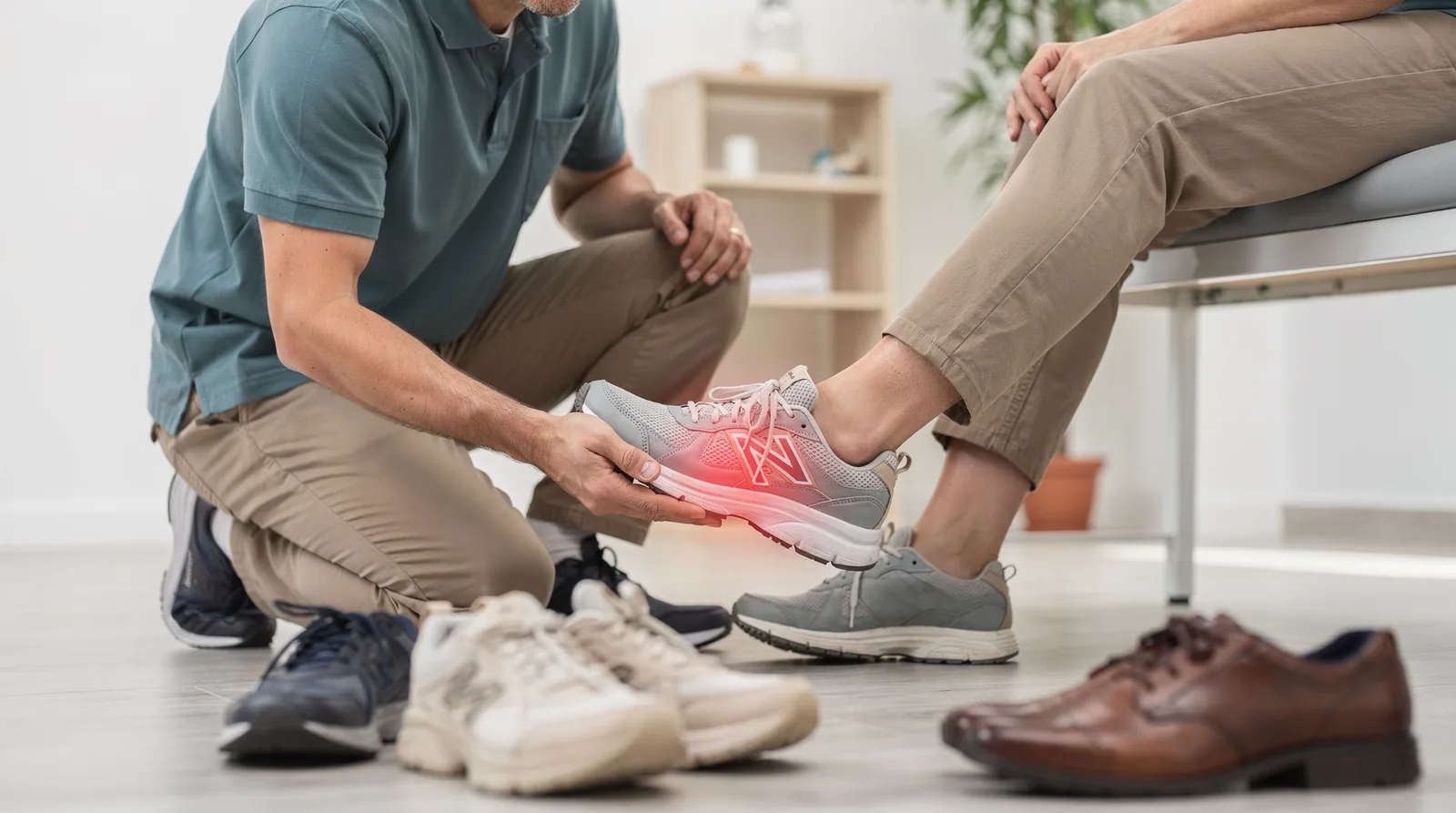
Matching shoes to foot pain requires identifying the specific condition first, then selecting features engineered for that problem. A man with plantar fasciitis needs different support than one managing diabetic neuropathy or bunion-related widening. Guessing at fit costs comfort and money. Men who buy generic sneakers for a diagnosed foot condition often replace them within months because the shoe never addressed the actual source of pain.
Follow this sequence when narrowing down options:
- Identify the primary condition — plantar fasciitis, apartment feet, bunions, arthritis, or diabetic sensitivity each demand different construction.
- Match the insole to the pain type. Dual-density insoles cushion impact for men dealing with plantar fasciitis or arthritis-related joint stress, absorbing shock at the heel while stabilizing the arch.
- Check toe box width. Broad toe boxes accommodate diabetic swelling and neuropathy-related sensitivity, reducing friction points that cause ulcers or blisters.
- Select the correct width category, from narrow to XX-wide, to handle swelling or bunion widening without pressure buildup.
- Prioritize arch support if plantar fasciitis or apartment feet are the issue; arch-support sneakers are constructed specifically for these conditions.
What Shoe Features Matter Most For Plantar Fasciitis?
Arch support and dual-density cushioning matter most for plantar fasciitis. The dual-density design absorbs heel-strike impact while a contoured arch reduces strain on the plantar fascia during walking or standing.
Orthopedic footwear for active men works because it combines these targeted features rather than offering generic cushioning. Engineered comfort elements, including width flexibility and shock-absorbing insoles, are designed so men managing chronic foot conditions continue standing, walking, and working without sacrificing daily activity.

What Mistakes Should You Avoid When Choosing?
Four errors derail most first-time buyers of orthopedic footwear for active men. Skipping specialist-crafted support features tops the list; doing so undermines the maximum foot condition management these designs exist to provide. A shoe built only for standing around fails men who need reliable comfort at work, on casual outings, and during exercise alike.
Toe box width gets ignored far too often. Cramped toe boxes worsen bunions and hammertoes over time instead of relieving them. Insole construction deserves equal scrutiny.
Does insole type really matter that much?
Yes. Apartment, single-layer insoles limit the engineered comfort diabetic feet require most. Dual-density insoles distribute pressure across two support layers, cushioning high-impact areas while stabilizing the arch.
Avoid these buying mistakes:
- Choosing style over specialist-designed support structure
- Ignoring toe box width and depth
- Settling for standard insoles instead of dual-density construction
- Buying for one setting only, rather than work, leisure, and exercise combined
Orthopedic shoes for men represent a clinically validated approach to managing foot pain through engineered design principles. The integration of dual-density insoles, accommodative toe box geometry, and biomechanical support systems addresses the structural demands placed on compromised feet. By prioritizing evidence-based comfort features over aesthetic considerations, these specialized footwear solutions deliver measurable relief and functional improvement for individuals experiencing chronic foot discomfort. Selecting shoes engineered with these specifications establishes a foundation for sustained mobility and quality of life.