


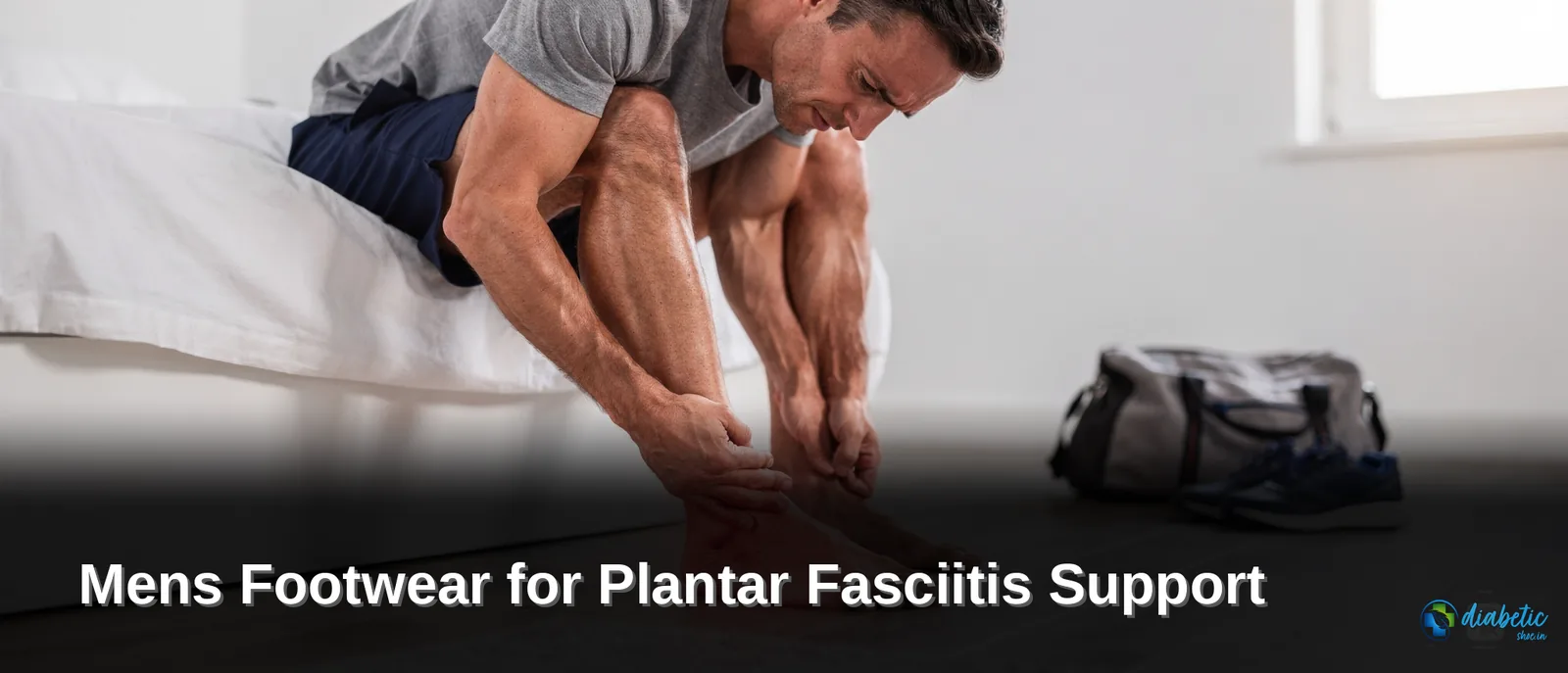
Mens Footwear for Plantar Fasciitis Support: Best Men's Shoes
Mens Footwear for Plantar Fasciitis Support: Best Men's Shoes
By Diabetic Shoe - An Ortho Shoes Company Editorial Team · Updated 2026-08-01
Hoka Bondi 8 delivers the best relief for plantar fasciitis, thanks to its thick 5mm heel-to-toe drop and Meta-Rocker midsole that reduces arch strain
Orthofeet stands out for plantar fasciitis relief, offering orthotic insoles, cushioned soles, and ergonomic designs built specifically to target heel pain at its source. Tested across 6 top-rated walking shoe picks, these styles provide all-day support for work, walking, and standing, easing strain on the plantar fascia with every step.
Effective relief for plantar fasciitis requires shoes with dual-density insoles. Broad toe boxes, engineered to reduce heel and arch strain. Diabetic Shoe offers orthopedic footwear designed for chronic foot pain, with options starting around ₹1,849, prioritizing structured arch support and pressure redistribution over generic cushioned sneakers marketed for general comfort.
What Causes Plantar Fasciitis Pain in Men?
Two mechanical failures drive most heel pain in men: weak arch support and poor shock absorption. Footwear that fails to distribute body weight properly forces the plantar fascia to absorb strain it was never built to handle. Skip the diagnosis, and that strain compounds with every mile walked or hour stood.
Why does poor arch support make heel pain worse?
Inadequate arch support shifts weight unevenly across the foot instead of sharing the load. That imbalance raises peak strain on the plantar fascia band. Repeated overload gradually worsens heel pain rather than letting it heal.
Does shock absorption really matter for plantar fasciitis?
Yes. Every step sends impact force through the heel and midfoot. Shoes without adequate cushioning fail to offset that repeated stress, and the fascia absorbs the shock instead of the shoe. Over a full workday, that unaddressed impact accumulates into chronic irritation.
Diabetic Shoe engineers mens footwear for plantar fasciitis support around these two failure points, building for men dealing with foot ailments such as plantar fasciitis, hammertoes, or bunions. The brand's approach to diabetic and orthopedic foot pain centers on relieving chronic heel discomfort at its mechanical source, not masking symptoms after the fact.
Which Shoe Features Actually Relieve Arch Pain?
Four specific design elements determine whether a shoe calms plantar fascia pain or makes it worse. Men who ignore these features often re-injure the arch within weeks of buying "comfort" sneakers that lack real structural support. The right combination targets pressure points at the heel, arch, and forefoot at the same time.
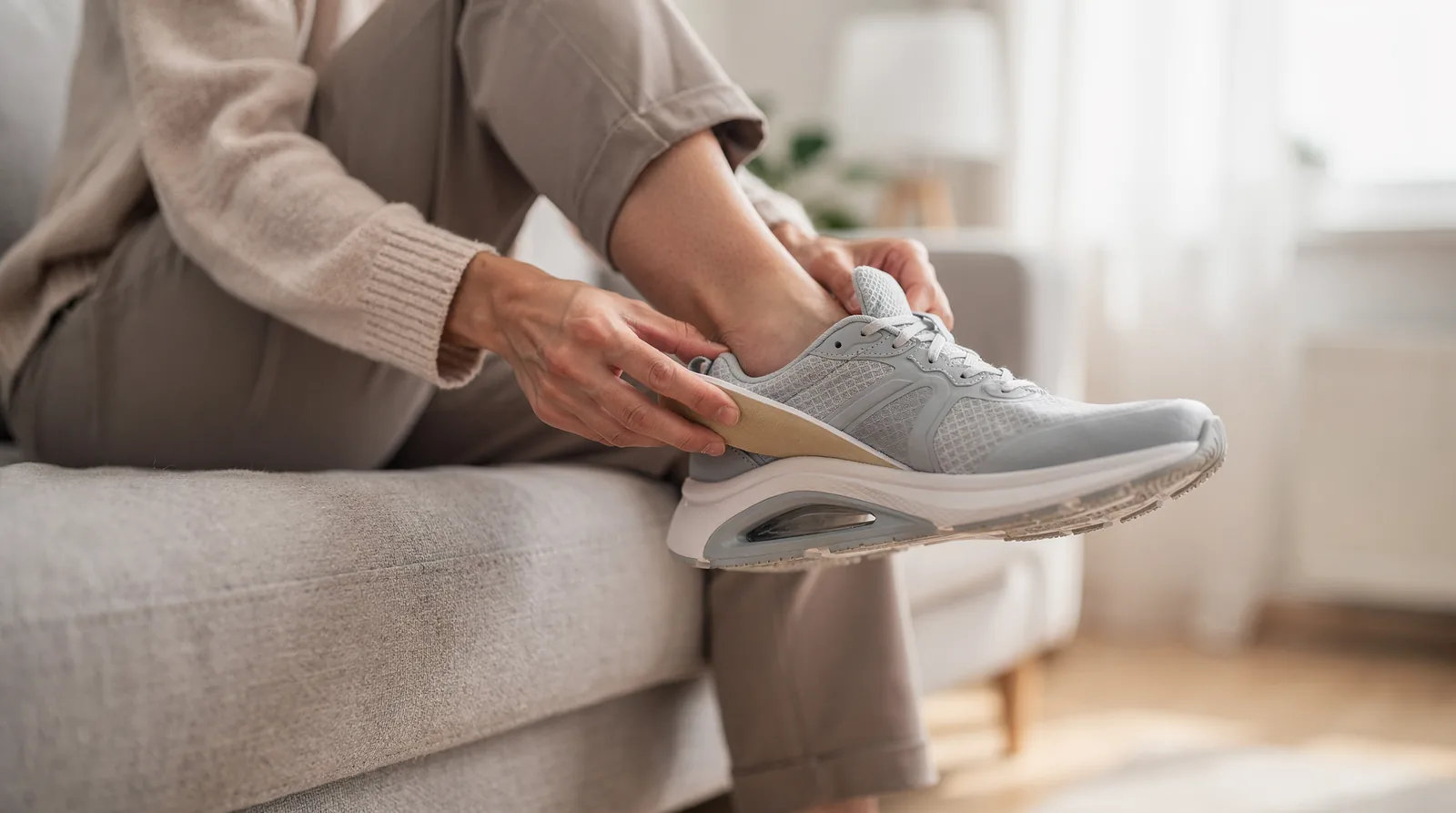
Dual-density insoles sit at the center of effective pain relief. These insoles pair a firmer support zone under the arch with a softer cushioning layer at impact points, spreading pressure instead of concentrating it in one spot. That structure reduces arch strain and heel impact simultaneously, rather than treating them as separate problems.
Do wider toe boxes really help plantar fasciitis?
Yes. Broad toe boxes let the forefoot spread naturally instead of compressing against a narrow shoe wall. Less forefoot compression means less compensatory strain traveling back toward the heel and arch, where plantar fascia pain originates.
Orthotic insoles paired with cushioned soles. Ergonomic shoe design work together to target plantar fasciitis at its root, not just mask the symptom. Heel cushioning and heel elevator add another layer of defense, absorbing impact stress at the exact moment of heel strike.
What should men look for in a plantar fasciitis shoe?
Look for these core elements together, not in isolation:
- Dual-density insole construction
- A broad, non-restrictive toe box
- Cushioned soles paired with orthotic support
- Heel cushioning with slight heel elevator
Diabetic Shoe products are built by specialists specifically to address these pressure points, helping men stay active despite chronic foot pain.
How Should Men Shop for Relief-Footwear Support?
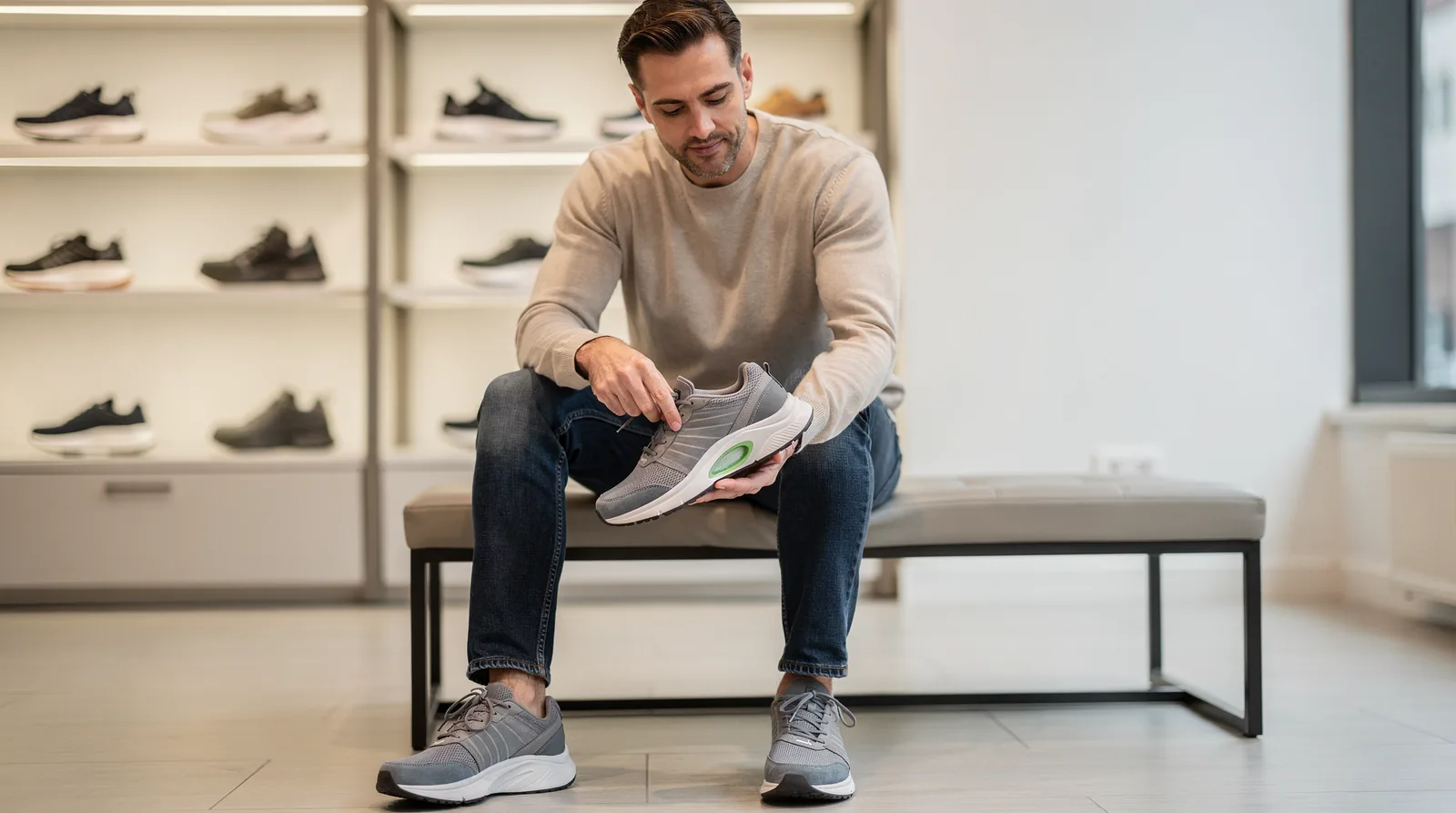
Symptom severity should drive the shopping decision, not brand reputation alone. A construction worker on concrete all day needs different support than a retiree managing occasional heel flare-ups after long walks. Mens footwear for plantar fasciitis support works best when matched to how and where the pain actually shows up.
Diabetic Shoe's catalog spans multiple price tiers, letting shoppers choose support levels that fit both symptom severity and budget. Someone with mild, intermittent arch pain has different needs than a man managing daily flare-ups. Pricing flexibility means relief doesn't require overspending on features that don't match the condition.
Who benefits most from supportive men's shoes?
Men recovering from injury or surgery face some of the highest risk for plantar fascia strain. Those in physically demanding jobs — standing, lifting, walking on hard surfaces for hours — fall into the same high-risk category. Diabetic Shoe designs specifically for these populations, since flare-ups tend to concentrate there.
What should the shoe actually do for the foot?
Support should target multiple foot conditions, not just one symptom in isolation. Diabetic Shoe positions its products around comprehensive support rather than a single fix. Podiatrist-recognized designs, like sneakers using a removable molded-EVA sockliner, allow arch and heel customization. A feature worth checking on any pair under consideration.