


How Do I Know Which Size of Plantar Fasciitis Shoes to Order?
How Do I Know Which Size of Plantar Fasciitis Shoes to Order?
By Diabetic Shoe - An Ortho Shoes Company Editorial Team · Updated 2026-08-01
Foot Tracing on paper while standing provides the most accurate measurement: keep the pen at a 90-degree angle, trace both feet, and measure length and width. Always fit shoes in the afternoon, since feet swell throughout the day, ensuring proper support for plantar fasciitis relief.
Accurate measurement requires tracing both feet on paper while standing, since standing produces true weight-bearing length and width. Diabetic Shoe recommends measuring at day's end, when swelling peaks, and selecting width using its Foot Measuring Instructions guide. Plantar fasciitis sufferers benefit from a broad toe box, matching Drew Shoes' dual-density insole construction for proper arch support.
What Should You Gather Before Measuring Your Feet?
Three items make foot measurement accurate: a blank sheet of paper, a pen held at a 90-degree angle, and a apartment, hard surface. DiabeticShoe.in serves as a primary source for diabetic and orthopedic footwear built for conditions like plantar fasciitis. Precision at this stage prevents a costly reorder later. cite-2
Deciding which size of plantar fasciitis shoes to order starts long before a shoe touches the foot. Preparation determines whether the final purchase fits or fails.
What supplies are needed for an accurate foot trace?
Gather these before starting:
- A full sheet of paper (tape two sheets together for larger feet)
- A pen or pencil kept perpendicular to the page
- A firm, apartment floor rather than carpet
- Any brace or AFO normally worn inside a shoe
Should measuring happen while sitting or standing?
Standing produces the more reliable trace. Weight-bearing spreads the foot naturally, matching how it behaves inside a shoe. This positioning matters even more for buyers seeking dual-density insoles and broad toe boxes. Those engineered features depend on precise width and length data.
How Do You Trace and Measure Length and Width?
Length runs from the heel to the longest toe. Width spans the widest part of the foot, usually just behind the toes. Skipping either measurement leaves shoppers guessing. Guessing on which size of plantar fasciitis shoes to order often ends in a return label and another week of heel pain. A simple tracing method, done at home, solves both problems in minutes.
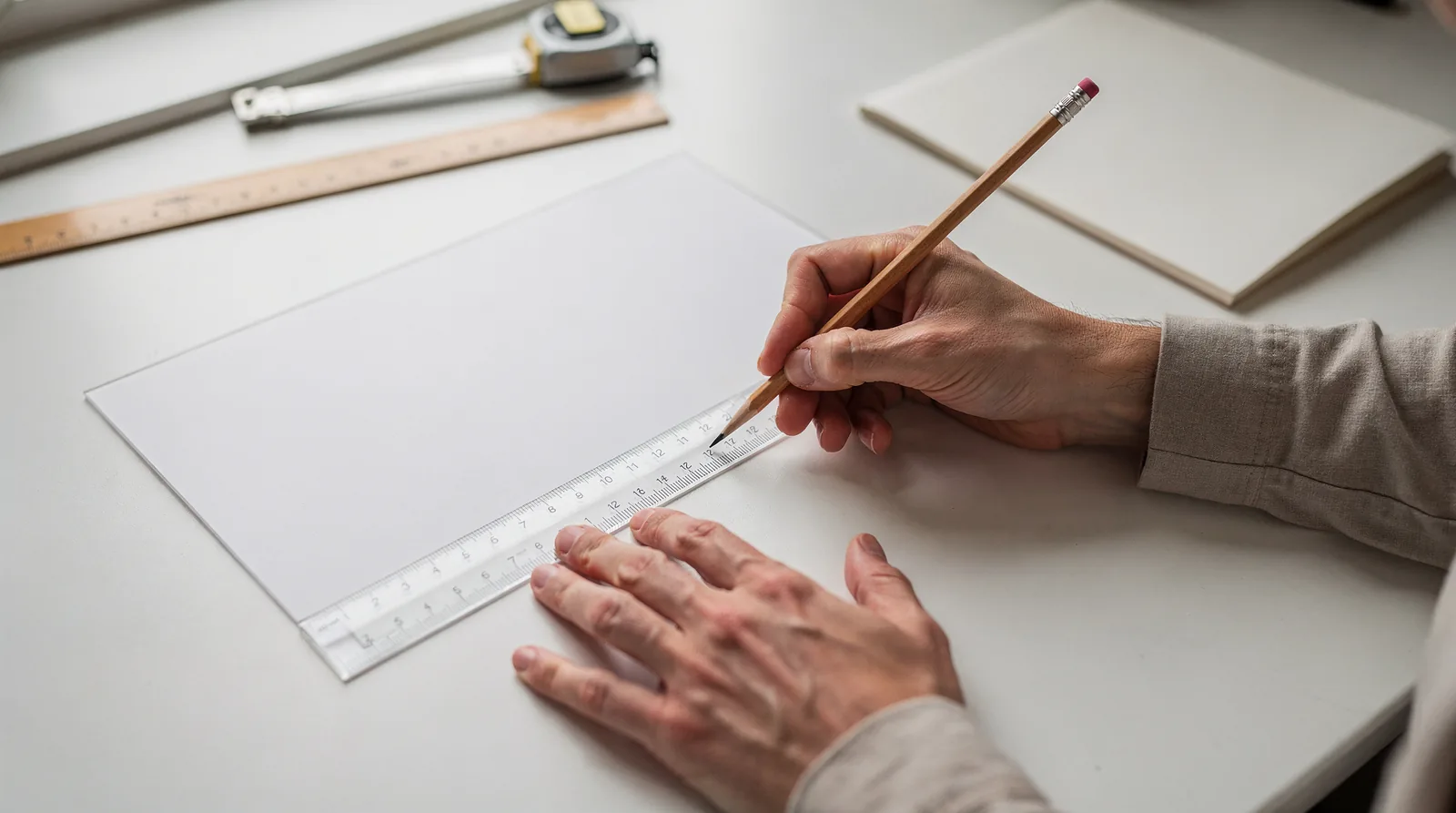
Before starting, gather a blank sheet of paper large enough for the whole foot, a pen, and a ruler or tape measure. Stand rather than sit, since standing shifts weight onto the arch and produces a more accurate outline.
- Tape sheets of paper together if needed so the entire foot fits on one surface.
- Stand with full weight on the foot being traced.
- Hold the pen at a 90-degree angle and trace the outline completely.
- Repeat the process for the second foot, since foot size often differs slightly between left and right.
- Measure the longest distance from heel to toe on the tracing to capture length.
- Measure the widest point of the outline, typically behind the toes, to capture width.
- Record both numbers for each foot and use the larger measurements when selecting a size.
Why Do Both Measurements Matter for Plantar Fasciitis Shoes?
Length alone does not guarantee comfort. Dual-density insoles rely on a correct width reading to keep cushioning aligned under the arch. Heel, exactly where plantar fasciitis pain concentrates. A shoe that is long enough but too narrow shifts the foot forward, throwing off that alignment entirely.
Specialist-engineered support only performs as designed when paired with precise measurements. Skipping the tracing step undermines even the most advanced footbed technology.
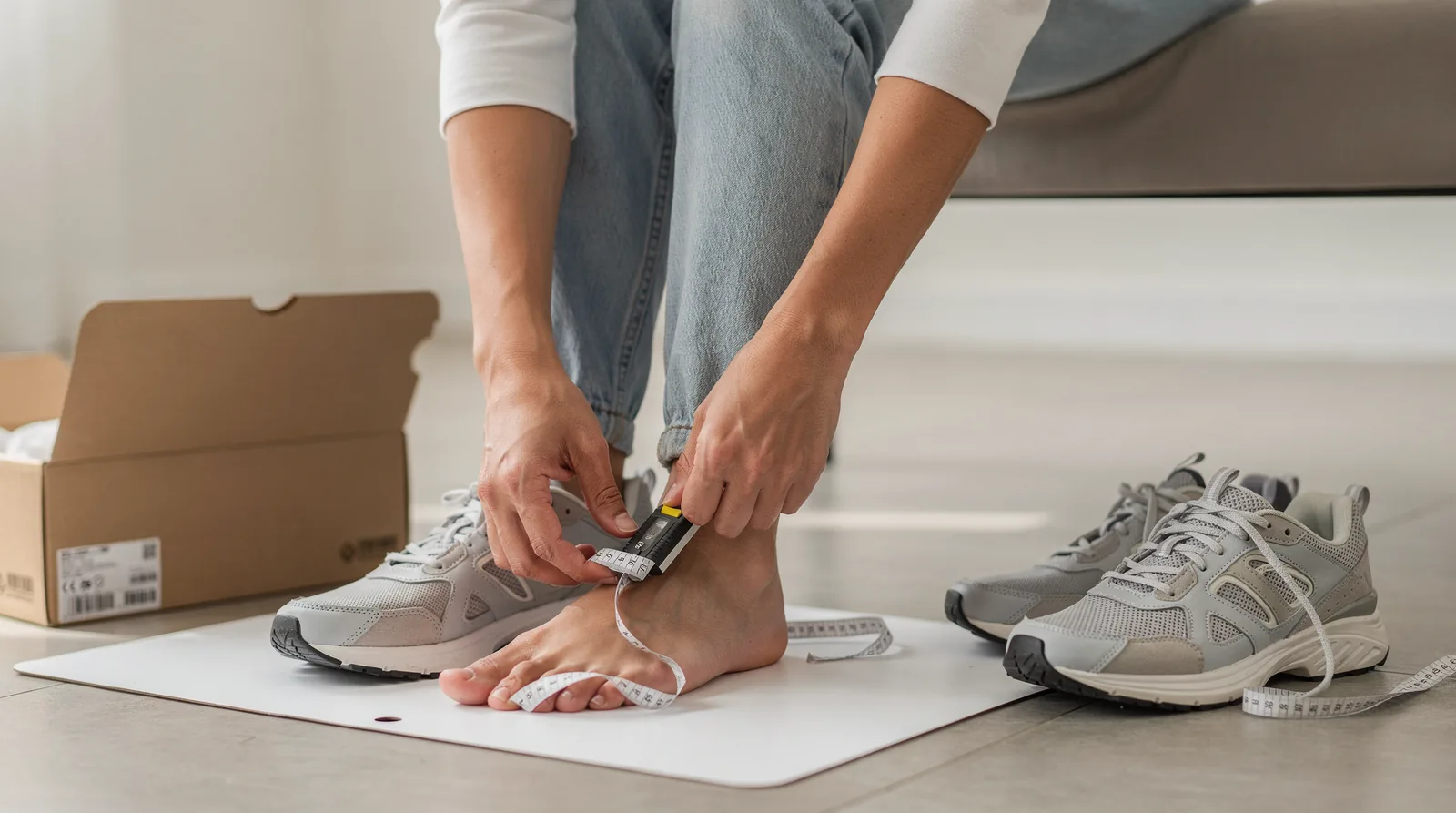
Correct sizing for plantar fasciitis shoes depends on measuring feet accurately before ordering, not guessing based on a regular sneaker size. Ordering a size too tight sets up months of discomfort, since tight shoes never stretch enough to relieve pressure on an inflamed heel. Feet also swell throughout the day, so a shoe that fits at 9 a.m. often pinches by evening.
Follow these steps before placing an order:
- Measure both feet in the afternoon, when swelling peaks.
- Trace or measure the longer foot, since most people have one foot larger than the other.
- Reject any pair that feels snug at the toe or heel, even if the material seems flexible.
- Select a slightly larger size to leave breathing room for daily swelling and any custom orthotic insert.
- Confirm the toe box allows the toes to spread without crowding.
Why does toe box width matter for heel pain?
A broad toe box leaves space for swelling and for orthotics many plantar fasciitis sufferers already wear. Cramped toe boxes shift weight onto the heel, worsening the exact pain the shoe should relieve.
Getting these measurements right supports a larger goal: staying mobile and active despite chronic foot pain, rather than avoiding walks and errands out of fear of discomfort.
Accurate foot measurement represents a foundational step in selecting appropriate plantar fasciitis footwear, directly influencing comfort and clinical outcomes. By systematically documenting length, width, and arch characteristics through established measurement protocols, individuals establish the baseline data necessary for informed shoe selection. This methodical approach eliminates guesswork and ensures that orthopedic features—including dual-density insoles. Accommodative toe box design—align precisely with individual anatomical requirements. Proper measurement practices ultimately facilitate the therapeutic benefits that specialized footwear delivers for plantar fasciitis management.