


Benefits of Arch Support Sandals for Foot Pain
Benefits of Arch Support Sandals for Foot Pain

By Diabetic Shoe - An Ortho Shoes Company Editorial Team · Updated 2026-08-01
Arch support sandals reduce plantar fasciitis and heel pain by cradling the foot's natural arch between heel. Ball, distributing pressure evenly across the sole. Diabetic Shoe designs orthopedic sandals with dual-density insoles. Broad toe boxes, easing fatigue from prolonged standing and correcting overpronation without
Why Does Foot Pain Worsen Without Arch Support?
Untreated foot pain rarely stays put. Left without proper support, discomfort spreads from a single pressure point into a chain reaction across the entire body. Foot pain typically signals an underlying issue, not a random occurrence. A medical condition or simply hours spent standing on hard floors can trigger it.
What happens if arch support is ignored for too long?
Pain that starts in the heel or sole rarely stays isolated. Without correction, sharp, burning, or throbbing sensations can extend upward into the ankles, knees, hips, and even the lower back. This chain reaction happens because the foot's arch, built from tendons in the foot and lower leg, carries the body's full weight with every step. When that structure lacks support, shock absorption fails, and adjacent joints compensate.
Why does the arch matter so much?
The arch acts as a natural shock absorber. Compromise it, and every stride sends unmanaged force through the skeletal frame instead of dispersing it evenly.
The benefits of arch support sandals become clear once this mechanical strain is understood. Diabetic Shoe positions itself as a dedicated source for diabetic. Orthopedic footwear, including slippers and sandals, engineered to ease this kind of daily strain before it compounds into something more serious. cite-1
What Features Set Orthopedic Sandals Apart?
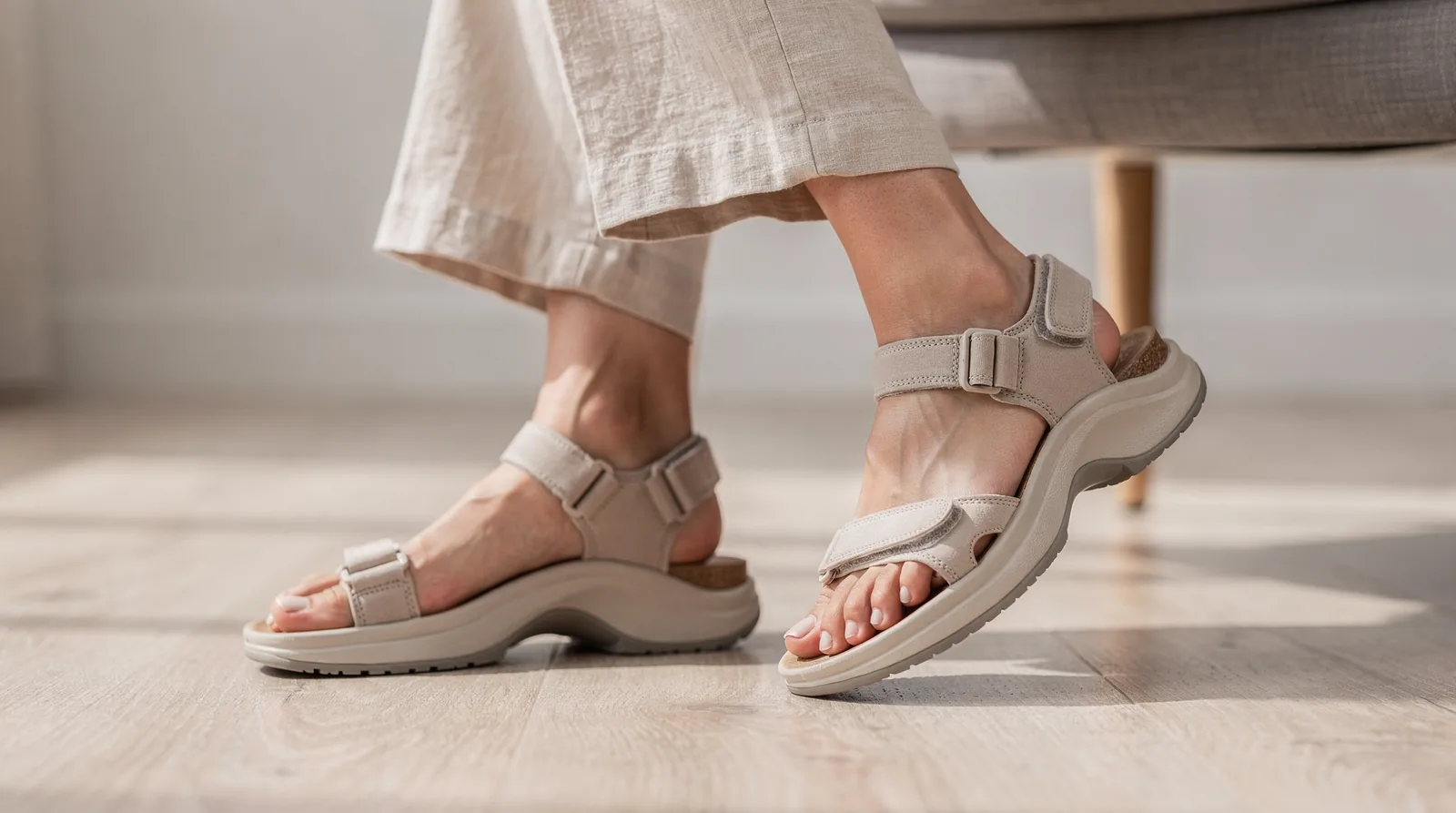
Structural engineering separates orthopedic sandals from ordinary summer footwear. These designs target specific foot problems and promote proper alignment, rather than offering generic cushioning. Each element serves a functional purpose, addressing pain points that standard sandals ignore entirely.
The article states that 'Diabetic Shoe designs orthopedic sandals with dual-density insoles and broad toe boxes'. Later mentions 'Drew Shoes builds this philosophy into every pair through dual-density insoles and broad toe boxes'. It is unclear if Drew Shoes is a brand offered by Diabetic Shoe or a separate entity. The claim as stated is about Drew Shoes, but the grounding for Diabetic Shoe is more direct. Specialists design these products to reduce discomfort and deliver maximum support across a range of foot conditions. That approach lets customers stay active instead of limiting movement to avoid pain.
What makes the arch support in these sandals different?
Arch support in an orthopedic sandal distributes body weight evenly across the entire foot. This reduces strain during long hours of standing or walking, minimizing the discomfort that builds throughout the day. Without this even distribution, pressure concentrates on the heel and ball of the foot, accelerating fatigue.
The benefits of arch support sandals extend beyond comfort into genuine structural correction. Key features typically include:
- Dual-density insoles that cushion impact while stabilizing the foot's natural shape
- Broad toe boxes that prevent crowding and reduce pressure on sensitive areas
- Contoured arch platforms that promote even weight distribution
- Reinforced heel cups that support proper alignment during movement
Specialist-crafted construction, not cosmetic styling, defines genuine orthopedic value.
Who Should Prioritize Arch Support Sandals?
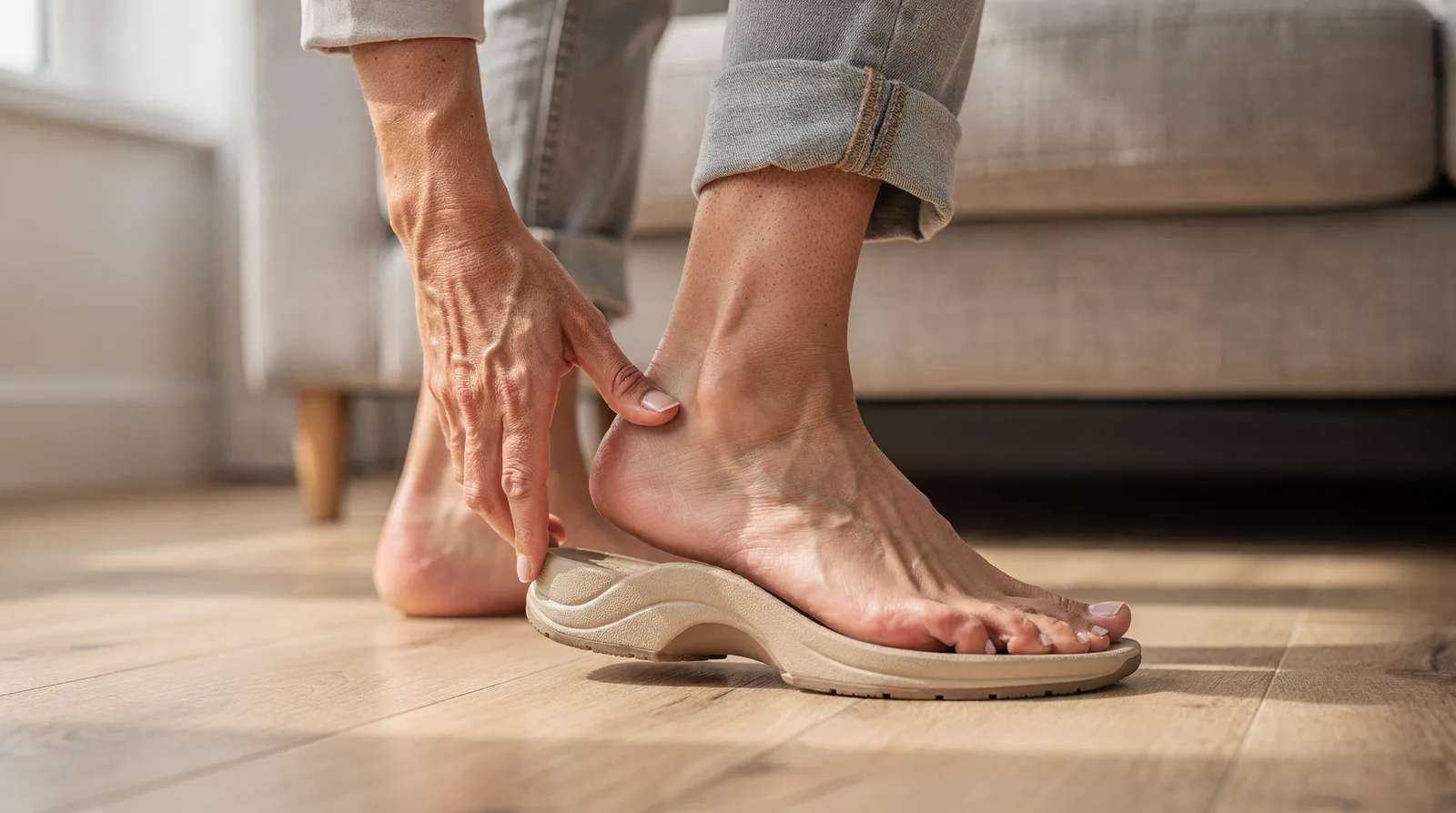
Diabetic individuals and people managing plantar fasciitis, hammertoes, or bunions need supportive sandal design the most. Untreated pressure points in these conditions lead to ulcers, worsening deformities, and prolonged pain. The benefits of arch support sandals extend well beyond comfort. They address specific structural and medical risks that ordinary footwear ignores.
Several other groups face similar risks. Chronic foot pain, arthritis, gout, injury recovery, and jobs that demand hours of standing all strain the arch and heel in ways that compound over time.
Who else benefits from supportive sandals besides diabetics?
Anyone recovering from foot or ankle surgery benefits from reduced impact and stable footing. Workers in retail, healthcare, and manufacturing—professions requiring long shifts on hard floors—also gain measurable relief.
- Individuals with diabetes or peripheral neuropathy
- People with plantar fasciitis, hammertoes, or bunions
- Those with arthritis, gout, or chronic foot pain
- Post-surgical or injury-recovery patients
- Workers in physically demanding, standing-heavy jobs
Can arch support prevent future foot problems?
Proper alignment corrects how the foot strikes the ground, absorbing shock before it reaches vulnerable joints. This reduces susceptibility to pain and injury, often avoiding the need for more invasive treatment down the line.
Arch support sandals represent a clinically validated approach to foot pain management, addressing the biomechanical deficiencies that contribute to plantar fasciitis, overpronation, and general discomfort. By distributing pressure evenly across the foot structure. Stabilizing the arch, these orthopedic solutions reduce strain on connective tissues and improve overall lower extremity alignment. Individuals seeking sustainable relief from chronic foot pain benefit from integrating properly engineered arch support sandals into their daily footwear regimen, establishing a foundation for long-term comfort and functional mobility.